


10 Practical Applications of Duct Rodders
Author:jiujiu Release time:2025-11-15 12:24:16 Number of views:102order
Among all tools used in cable installation, the Duct Rodder stands out as one of the most adaptable and durable. Designed for pushing and pulling cables through conduits, this flexible fiberglass rod has become an indispensable part of modern electrical, telecommunication, and construction projects.
Understanding different Duct Rodder uses not only helps technicians work more efficiently but also highlights why many professionals trust manufacturers with strong production capabilities for consistent tool quality.
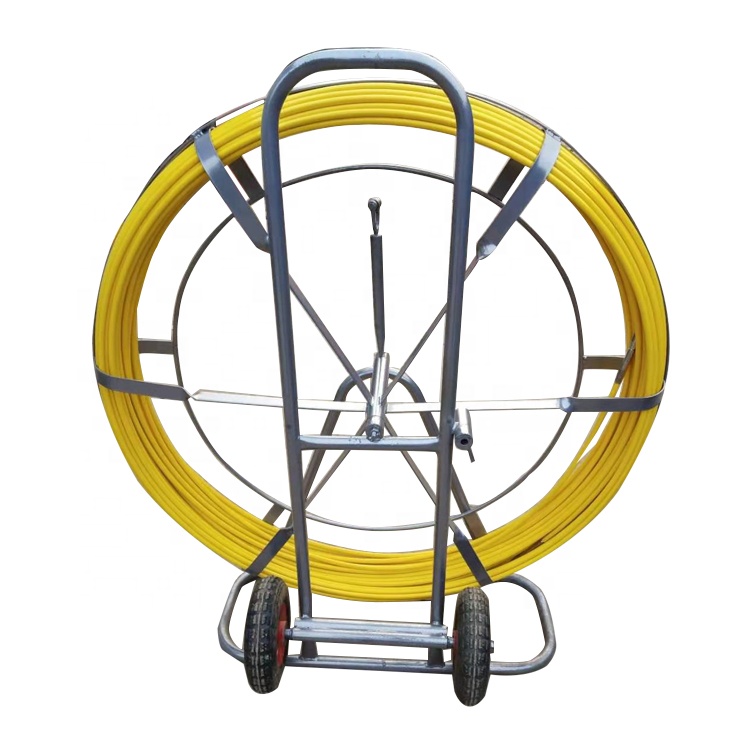
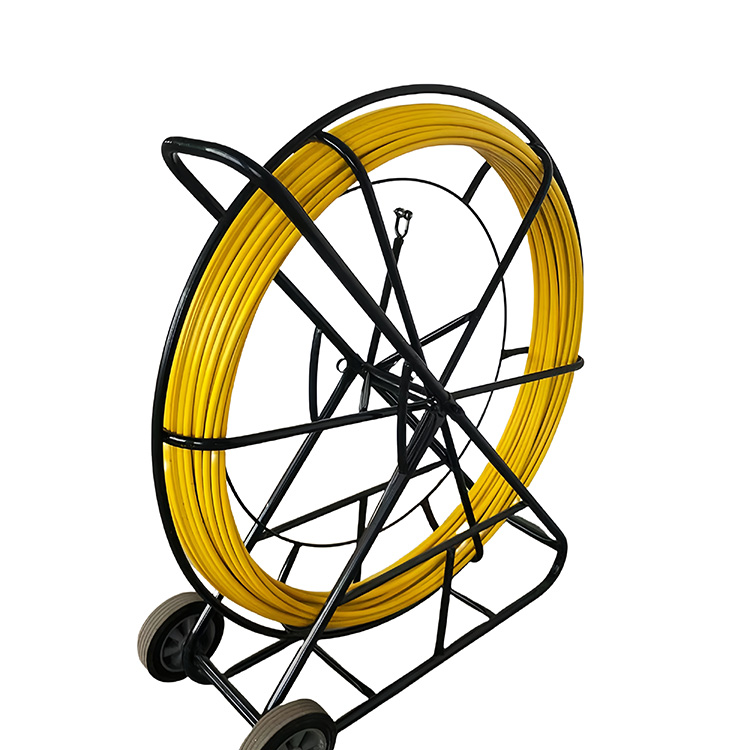
1. Electrical Conduit Cable Pulling
Electricians rely on Duct Rodders to feed or pull wires through conduits that run beneath floors, walls, or ceilings. The rod’s rigidity ensures it moves straight through long ducts, while its smooth coating reduces friction, protecting cable insulation from damage.
This is one of the most common and practical Duct Rodder uses in the electrical industry.
2. Fiber Optic Cable Deployment
In fiber optic projects, speed and precision are essential. Duct Rodders help technicians quickly feed optical cables into pre-installed conduits without twisting or snagging. Because they are non-conductive, they are safe to use around power lines and electronic systems — a major advantage in telecommunication applications.
3. Locating Underground Duct Pathways
Traceable Duct Rodders are equipped with an internal copper wire that emits a detectable signal when connected to a transmitter. This allows engineers to locate and map underground conduits accurately without digging. Such Duct Rodder uses are common in municipal and civil engineering fields where accuracy and safety are paramount.
4. Pull Line or Rope Insertion
Before heavy-duty cables are installed, a Duct Rodder is often used to push a lightweight rope through the duct. Once the rope reaches the far end, it can be used as a pull line for larger cables. This step-by-step process minimizes friction and prevents cable damage, improving efficiency on complex wiring jobs.
5. Cleaning and Maintenance of Duct Systems
Another underrated yet highly valuable Duct Rodder use is conduit cleaning. By attaching cleaning brushes or foam heads to the rod’s tip, technicians can remove accumulated dust, sand, or water from duct interiors. Regular maintenance with a Duct Rodder ensures optimal airflow and cable longevity.
6. Installing Communication and Data Cables
Data centers, network hubs, and office buildings all require extensive cable routing. A Duct Rodder simplifies this process by helping installers guide Ethernet, coaxial, or fiber cables through complex conduit networks. Its smooth surface ensures efficient feeding, even through tight bends.
7. Assisting in Pipeline Inspection and Survey
When paired with cameras or sensors, Duct Rodders serve as guiding tools for pipeline inspection. The rod helps position cameras deep within conduits, enabling technicians to evaluate pipe conditions, locate blockages, or assess corrosion without excavation.
8. Wiring Industrial and Production Facilities
Inside factories or production plants, wiring often extends through ducts and service channels. Here, Duct Rodders play a key role in feeding control cables or power lines safely through these confined paths. Their durability and resistance to heat, chemicals, and abrasion make them suitable for industrial-grade applications.
9. Routine Utility Maintenance
Utility companies use Duct Rodders to check the condition of underground systems before upgrades or repairs. Their flexibility allows operators to detect duct obstructions and ensure the line is clear before pulling in new cables. It’s a simple, cost-effective way to maintain infrastructure integrity.
10. Large-Scale Infrastructure Construction
On major infrastructure projects — from power substations to fiber backbones — professional manufacturers supply Duct Rodders in bulk for reliable performance. Industrial production lines ensure consistent dimensions, tensile strength, and coating quality, which is vital for long-distance conduit installations that demand uniform performance.
Why Duct Rodders Are Preferred by Professionals
Across all industries, the Duct Rodder is valued for its adaptability, non-conductivity, and resilience. Unlike traditional wire fish tapes, fiberglass Duct Rodders don’t corrode, kink, or deform. They deliver smoother operation and long-term dependability.
Electricians and network engineers choose them because they simplify complex installations and reduce manual labor. Meanwhile, experienced manufacturers continuously refine rod design and production methods to meet evolving safety and performance standards.
Maintenance and Care Tips
To ensure your Duct Rodder maintains top performance:
·Clean after each use to remove grit or debris.
·Inspect connectors and ends for wear.
·Lubricate moving reel parts periodically.
·Store it in a dry area away from direct sunlight and extreme temperatures.
These steps extend the service life and preserve flexibility across repeated uses.
Conclusion
The versatility of Duct Rodders extends far beyond cable pulling. From electrical wiring and fiber optics to industrial maintenance and underground mapping, their applications are extensive and vital to modern infrastructure.
When sourced from a trusted manufacturer with advanced production capability, you can rely on consistent performance, superior strength, and bulk availability for any project scale.
In short, the Duct Rodder is not just a tool — it’s a cornerstone of efficient, safe, and professional cable installation across industries.
References
GB/T 7714:Qin H, Ka T A, Li X, et al. Evaluation of tensile strength variability in fiber reinforced composite rods using statistical distributions[J]. Frontiers in Built Environment, 2025, 10: 1506743.
MLA:Qin, Hao, et al. "Evaluation of tensile strength variability in fiber reinforced composite rods using statistical distributions." Frontiers in Built Environment 10 (2025): 1506743.
APA:Qin, H., Ka, T. A., Li, X., Sun, K., Qin, K., Noor E Khuda, S., & Tafsirojjaman, T. (2025). Evaluation of tensile strength variability in fiber reinforced composite rods using statistical distributions. Frontiers in Built Environment, 10, 1506743.