


5 Common Fish Tape Mistakes and How to Avoid Them
Author:jiujiu Release time:2025-11-12 10:51:23 Number of views:90order
In electrical installation work, few tools are as indispensable as fish tape. It’s the go-to instrument for guiding wires through conduits, walls, and tight corners. Yet, despite its simplicity, many technicians misuse it—resulting in damaged cables, wasted hours, or even safety hazards.
Having supplied fish tape from China in bulk to professionals worldwide, we’ve observed several recurring problems in the field. Understanding these common mistakes—and learning how to avoid them—will help you pull wires more efficiently and extend the life of your equipment.
Here are the top five mistakes electricians often make when using fish tape, along with practical solutions from industry experts.
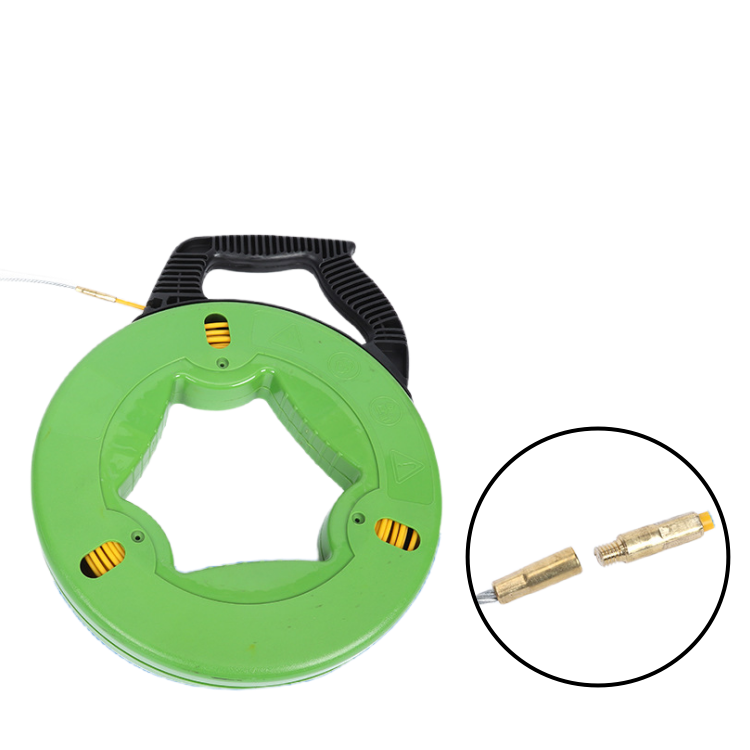
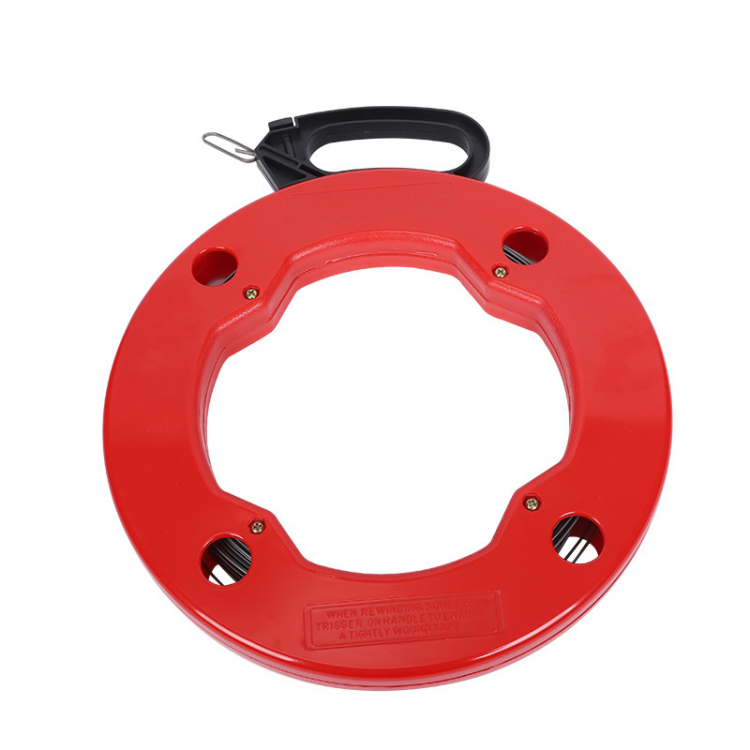
1. Forcing the Tape Instead of Guiding It
When the tape hits resistance, many users instinctively push harder. Unfortunately, this often causes kinks, bends, or permanent deformation, especially in steel fish tapes.
How to prevent it:
Approach resistance with patience. Gently rotate, withdraw, and reinsert the tape to locate a smoother passage. A small amount of wire-pulling lubricant can reduce friction inside conduits and prevent jamming.
2. Skipping the Pre-Use Inspection
Over time, any tool can wear out, and fish tape is no exception. Using a damaged or rusty tape increases the chance of snapping mid-pull—wasting both time and materials.
How to prevent it:
Before every job, do a quick visual and tactile inspection. Look for cracks, rough edges, or corrosion. Clean off dirt and check that the pulling eye or leader is firmly attached. A 30-second check can prevent an hour of rework.
3. Pulling Too Many Wires at Once
Efficiency is good—but overloading your fish tape is not. Pulling a large bundle of wires in one go can stress the tape and damage the wire insulation.
How to prevent it:
Stick to smaller, manageable bundles. If several circuits need to be pulled, do them separately. When binding cables, use grips or smooth electrical tape to avoid snagging. The goal is steady, controlled pulling rather than brute strength.
4. Storing Fish Tape Improperly
After a long day, it’s tempting to toss your tools into the truck and leave. But careless storage shortens the lifespan of any fish tape—especially steel ones that can rust or warp in humid conditions.
How to prevent it:
Always clean and coil the tape neatly before storing it. Keep it in a dry toolbox or case. For professionals working in damp areas, fiberglass or nylon fish tapes are more resistant to moisture and corrosion.
5. Choosing the Wrong Fish Tape Type
Every job is different, and using one kind of fish tape for everything is a classic rookie error. The wrong choice can make pulling more difficult than it needs to be.
How to prevent it:
Select a tape that suits the environment:
·Steel fish tape – High strength for long, straight conduit runs.
·Fiberglass fish tape – Non-conductive, great for tight bends and live circuits.
·Nylon or polyester tape – Flexible and lightweight for shorter or simpler pulls.
If your work involves both residential and industrial projects, investing in multiple types ensures you’re ready for any scenario.
Bonus Tip: Maintain It Like a Pro
Even the toughest tools benefit from care. Regularly clean your fish tape after use, lubricate moving parts, and replace worn tips or handles. These small habits dramatically improve performance and extend service life.
Why Quality Matters
In professional electrical work, efficiency and reliability are everything. A poorly made fish tape can cause unexpected downtime or even cable damage during installation. Choosing a trusted China manufacturer that provides consistent quality and bulk supply ensures your tools meet industrial standards.
Our factory specializes in fish tape production and large-scale supply for global distributors, contractors, and electrical equipment suppliers. Every piece is tested for durability, tensile strength, and smooth wire pulling performance—because we know professionals depend on their tools to get the job done right.
Conclusion
Using fish tape effectively isn’t just about strength—it’s about technique, patience, and tool quality. By avoiding these five common mistakes, electricians can save time, prevent accidents, and achieve cleaner, faster installations.
Whether you’re upgrading your toolkit or sourcing products for your business, remember that choosing high-grade fish tape from a reliable China supplier gives you better performance, longer service life, and peace of mind.
For bulk fish tape supply, OEM customization, or wholesale cooperation, feel free to contact us. Reliable tools, when handled correctly, always lead to reliable results.
References
GB/T 7714:Jaya T, Michalak B, Radke M, et al. Industrial Cabling in Constrained Environments: a Practical Approach and Current Challenges[J]. arXiv preprint arXiv:2404.10829, 2024.
MLA:Jaya, Tanureza, et al. "Industrial Cabling in Constrained Environments: a Practical Approach and Current Challenges." arXiv preprint arXiv:2404.10829 (2024).
APA:Jaya, T., Michalak, B., Radke, M., & Haninger, K. (2024). Industrial Cabling in Constrained Environments: a Practical Approach and Current Challenges. arXiv preprint arXiv:2404.10829.