


How a Cable Pay-off Stand Improves Installation Speed
Author:jiujiu Release time:2025-11-17 14:00:34 Number of views:91order
A Cable Pay-off Stand is one of the most critical tools in cable installation projects, yet it is often overlooked until efficiency problems appear on-site. Whether the job involves electrical cabling, telecom lines, fiber optic rolls, or industrial wiring, the right Cable Pay-off Stand can dramatically change the speed, safety, and smoothness of every installation workflow.
For contractors, engineers, and procurement teams sourcing equipment from a Manufacturer with strong Production capability and batch supply capacity, understanding how a Cable Pay-off Stand directly improves installation speed is essential. This deep dive explains why.
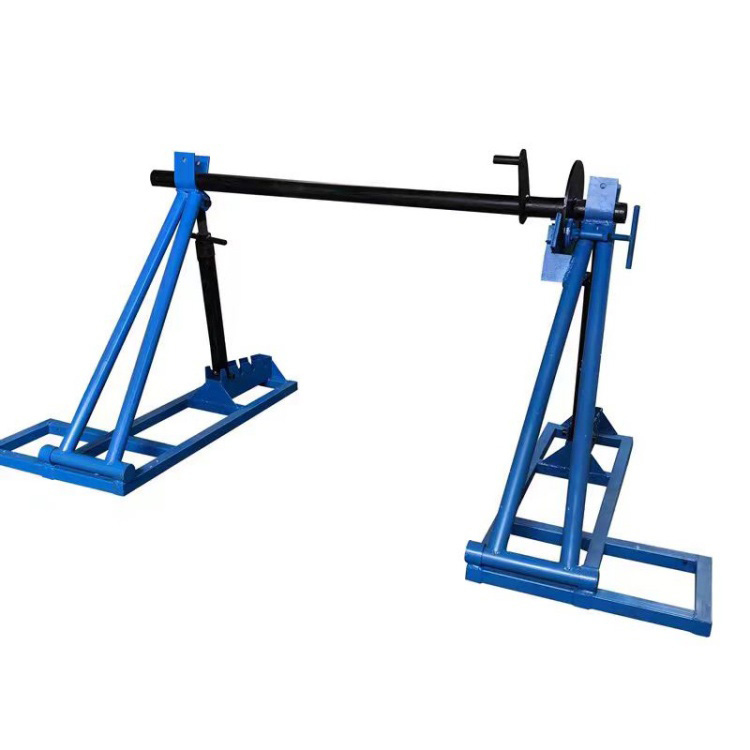
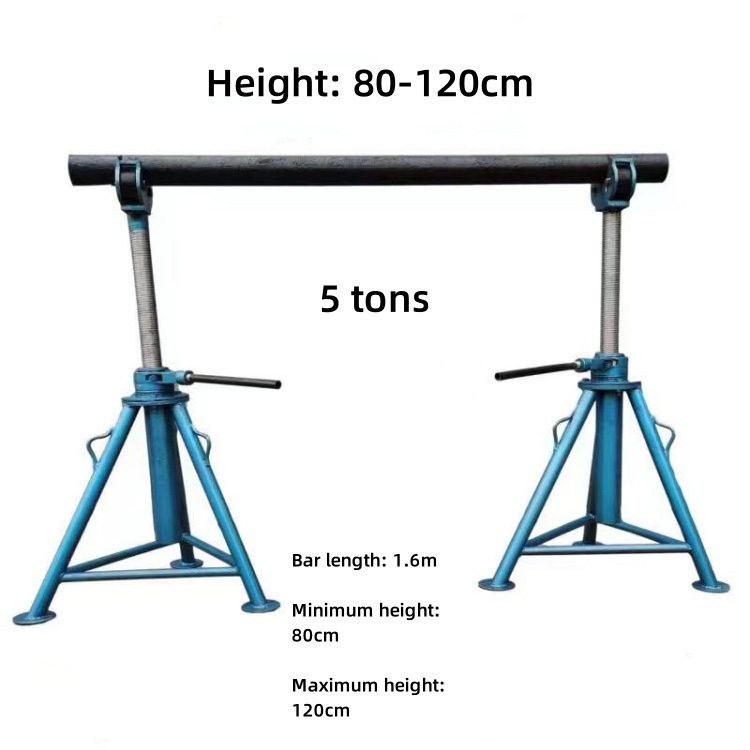
Why Cable Installation Speed Depends on the Pay-off System
Cable installation is rarely limited by manpower alone. In most projects, the real bottleneck is cable management—specifically, how quickly and smoothly the cable can unwind from its drum. Manual rolling or unstable stands cause:
·Jerky tension
·Cable tangling
·Physical strain on workers
·Wasted labor hours
·Higher risk of cable damage
A stable, well-engineered Cable Pay-off Stand addresses these issues by creating a controlled, low-friction unwinding environment that allows the cable to feed smoothly and consistently.
How a Cable Pay-off Stand Enhances Efficiency
1. Smooth Tension Control for Faster Pulling
When cable tension fluctuates, installation speed drops. Workers must stop repeatedly to fix twists or adjust the drum manually.
A high-quality Cable Pay-off Stand uses engineered rollers, bearings, or spindles that maintain stable tension. This allows teams to pull cable continuously without interruption. The consistent tension reduces pulling resistance, keeping the operation smooth and predictable—even on long-distance installations.
2. Improved Drum Stability Reduces Downtime
A drum that wobbles or shifts position creates delays and safety risks. With a sturdy Cable Pay-off Stand designed by a Manufacturer with full Production capabilities, the drum remains fixed in place even when rotating at high speed.
Stable drum support means:
·No sudden stops
·No need for re-centering
·No friction damage to the cable
·Minimal risk of tilt or tip-over
The result is a faster, safer installation flow.
3. Reduced Manual Labor and Operator Fatigue
Without the right stand, cable unwinding requires more physical effort. Workers must stabilize the drum manually, manage tension, and sometimes lift or reposition the spool.
A Cable Pay-off Stand eliminates these repetitive tasks. Workers simply feed and pull the cable, meaning their energy goes toward installation—not battling the drum. Less fatigue translates directly to greater speed and higher daily output.
4. Optimized Workflow for Long Cable Runs
Large projects—factory wiring, telecom trunk lines, underground installation, or wind farm cables—often require pulling hundreds of meters at once. Long runs are where a Cable Pay-off Stand truly shines.
Its controlled feed system allows continuous cable movement without tangles, loops, or sudden resistance spikes. This enables crews to use automated pulling equipment efficiently and maintain momentum throughout the installation.
5. Suitable for Multiple Drum Sizes and Cable Types
Another factor contributing to faster operations is versatility. A well-engineered Cable Pay-off Stand accommodates various drum diameters and cable thicknesses.
This adaptability eliminates downtime when switching between:
·Power cables
·Data cables
·Fiber optic reels
·Heavy industrial cables
The reduced setup time accelerates the full project schedule.
Why Manufacturer-Level Production Matters
Not all Cable Pay-off Stands deliver the same performance. Manufacturing quality plays a huge role in how fast and efficiently cable can be installed.
Precision Engineering Improves Speed
A Manufacturer with strong Production capability ensures:
·Accurate bearing alignment
·Smooth spindle rotation
·Reinforced frame strength
·Steel consistency and load-tested welds
·Surface treatments that reduce wear
These Production details prevent vibration, ensure stable pay-off rotation, and maintain speed under heavy loads.
Batch Supply Ensures Project Consistency
For contractors handling repeated projects or large infrastructure contracts, sourcing from a Manufacturer with batch supply capability ensures:
·Consistent stand quality
·Uniform specifications across multiple units
·Predictable handling performance
·Reduced inspection and verification time
This uniformity guarantees that installation teams work with compatible equipment, improving speed and safety across all job sites.
Practical Situations Where a Cable Pay-off Stand Dramatically Boosts Speed
A well-designed stand shows its value in many high-demand environments:
·Commercial electrical installations
·Telecom and fiber deployment
·Construction sites with long conduit systems
·Underground utility installation
·Factory or industrial equipment wiring
In every case, installation speed increases because teams avoid delays caused by manual cable handling.
Conclusion: Cable Pay-off Stands Are Essential for High-Speed Installation
From the moment cable installation begins, a Cable Pay-off Stand determines the speed, smoothness, and safety of the entire project. When sourced from a Manufacturer with advanced Production capabilities and reliable batch supply, the stand becomes more than a tool—it becomes a productivity multiplier.
A high-quality Cable Pay-off Stand reduces friction, stabilizes tension, improves worker safety, and accelerates every phase of cable deployment. For any organization that values efficiency and project performance, investing in a well-engineered stand is a strategic decision that pays off on every job site.
References
GB/T 7714:Gunasekaran A, Ngai E W T. The future of operations management: an outlook and analysis[J]. International Journal of Production Economics, 2012, 135(2): 687-701.
MLA:Gunasekaran, Angappa, and Eric WT Ngai. "The future of operations management: an outlook and analysis." International Journal of Production Economics 135.2 (2012): 687-701.
APA:Gunasekaran, A., & Ngai, E. W. (2012). The future of operations management: an outlook and analysis. International Journal of Production Economics, 135(2), 687-701.