


How to Choose the Right Polyester Cable Puller Length
Author:jiujiu Release time:2025-11-23 22:29:43 Number of views:86order
Selecting the correct Polyester Cable Puller length is one of the most important decisions in any wire-pulling or conduit installation project. For contractors, technicians, and even Manufacturer teams involved in bulk Production, a well-chosen puller length not only boosts efficiency but also prevents tangling, excessive friction, and unnecessary operational delays. Because Polyester Cable Pullers are widely used for their flexibility, strength, and durability, ensuring the right length becomes essential for safe and precise cable routing.
This guide walks you through the key considerations when choosing the most suitable puller length for different installation environments, whether you are dealing with long conduit runs or quick residential pulls.
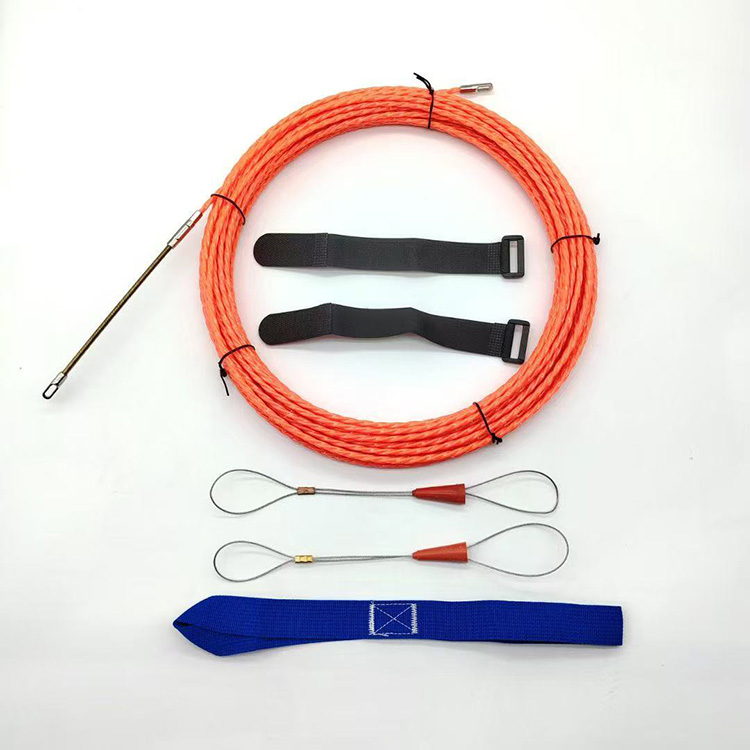
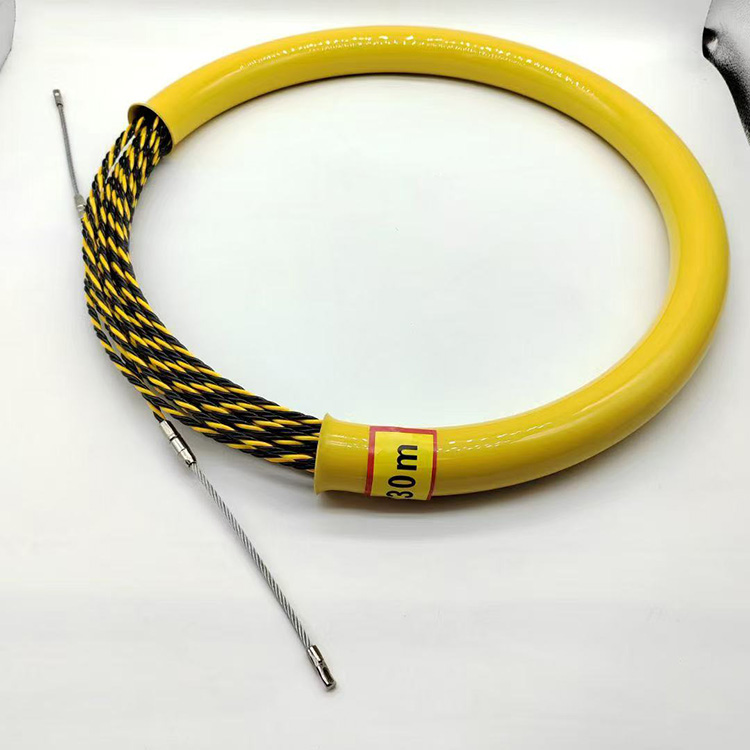
Why Polyester Cable Puller Length Matters
A Polyester Cable Puller is designed to navigate conduits, ducts, and complex wiring routes with minimal resistance. Selecting the wrong length, however, can create several avoidable issues:
·Too short → cannot reach target points, requiring extensions
·Too long → causes unnecessary coiling, knotting, and handling difficulty
·Wrong strength-to-length ratio → reduces pulling efficiency
Choosing the right length ensures smoother installation, reduces labor time, and increases tool longevity, especially for teams working in high-volume Production environments.
Key Factors to Consider
1. Conduit Length
The most straightforward factor is the actual distance of the conduit or pipe. Pullers should always be longer than the conduit to allow controlled maneuvering at entry and exit points.
A good rule of thumb:
Add 10–15% extra length to the conduit distance.
2. Complexity of Conduit Routing
Straight runs require minimal extra length, but installations with:
·multiple bends,
·junctions,
·vertical climbs,
·or offset transitions
demand longer Polyester Cable Pullers to maintain tension and prevent structural stress on the fish tape.
3. Working Environment
Commercial and industrial settings typically involve longer cables and larger conduits. Residential tasks often require shorter tools for easy handling. Manufacturer testing shows that technicians with shorter runs tend to prefer medium-length pullers for better control.
4. Pulling Force Requirements
The longer the puller, the more flexibility is required to maintain tensile strength without creating coil memory. Polyester materials perform well in flexible applications, but extreme lengths may require heavier-duty variants.
Matching Length to Installation Scenarios
Short Runs (Below 15 m / 50 ft)
Common in residential or light commercial work.
Recommended puller length: 20–30 m
Ensures minimal handling difficulty while still covering bends.
Medium Runs (15–45 m / 50–150 ft)
Standard length for electricians installing multiple circuits.
Recommended puller length: 45–60 m
Balances control and reach, good for most conduit layouts.
Long Industrial Runs (45–100 m / 150–330 ft)
Common in warehouses, manufacturing lines, or large buildings.
Recommended puller length: 60–120 m
This range accommodates complex routes and reduces repositioning time.
Extra-Long Specialized Runs (100 m+ / 330+ ft)
Used for infrastructure, tunnels, cable trays, or plant-wide systems.
Recommended puller length: Custom or oversized Polyester Cable Pullers
Manufacturer-level Production teams typically provide custom spools for these scenarios.
Tips from a Manufacturer’s Production Perspective
Because Polyester Cable Pullers are widely used in bulk supply markets, manufacturers often optimize lengths based on real-world application feedback. Here are insights from Production settings:
✔ Standard lengths exist for a reason
Common Production lengths—30m, 60m, 90m, 120m—are optimized for typical installation environments.
✔ Overlong pullers increase wear
Longer tools suffer more surface friction, affecting lifespan if used improperly.
✔ Polyester performs well in longer applications
Compared to some materials, polyester maintains stability, reduces coil memory, and provides consistent tensile performance.
✔ Custom lengths benefit large-scale projects
Manufacturers can supply bulk custom puller lengths tailored to conduit dimensions in major construction or industrial facilities.
Common Mistakes to Avoid
1. Choosing the longest option “just in case”
Overlength pullers are harder to control and wear out faster.
2. Ignoring conduit bends
Bends add “effective length,” even if the conduit appears short in measurement.
3. Forgetting to match tool size and strength
Longer pullers should match higher-strength polyester fiber specifications.
4. Misjudging future expansion
Leaving a small buffer helps accommodate future modifications without buying a new puller.
Final Recommendations
To choose the right Polyester Cable Puller length, consider:
·actual conduit length,
·complexity of routing,
·installation environment,
·and anticipated pulling force.
For high-volume jobs or multi-build deployments, sourcing pullers directly from a Manufacturer engaged in large-scale Production ensures more stable quality and better customization options. Polyester Cable Pullers remain a versatile and reliable solution—provided the chosen length aligns with real installation needs.
Conclusion
Selecting an appropriate Polyester Cable Puller length is essential for efficient, safe, and cost-effective cable installation. Whether you're performing small residential tasks or large-scale industrial wiring, understanding how length impacts performance helps you choose correctly every time. For teams relying on bulk Production supply, working directly with a Manufacturer ensures consistent quality and availability across projects.
References
GB/T 7714:Hutchings I, Shipway P. Tribology: friction and wear of engineering materials[M]. Butterworth-heinemann, 2017.
MLA:Hutchings, Ian, and Philip Shipway. Tribology: friction and wear of engineering materials. Butterworth-heinemann, 2017.
APA:Hutchings, I., & Shipway, P. (2017). Tribology: friction and wear of engineering materials. Butterworth-heinemann.