


How to Set Up a Cable Reel Stand for Efficient Cable Laying
Author:jiujiu Release time:2025-11-17 14:00:34 Number of views:196order
A Cable Reel Stand plays a central role in electrical installation, telecom construction, industrial wiring projects, and utility infrastructure upgrades. Whether you're deploying low-voltage signal cables or heavy-duty power lines, a well-designed Cable Reel Stand ensures smooth payout, minimal twisting, and safe operation on-site. Because cable management efficiency directly impacts installation time and overall project cost, understanding how to properly set up the equipment becomes essential.
This in-depth guide explains the correct method for setting up a Cable Reel Stand to maximize safety, performance, and workflow efficiency. From preparing the work area to aligning reels, managing tension, and maintaining load stability, each step contributes to a faster and more controlled cable laying process. It also highlights how choosing stands produced by a true Manufacturer with advanced Production capacity and batch supply capability can make a noticeable difference in day-to-day field operations.
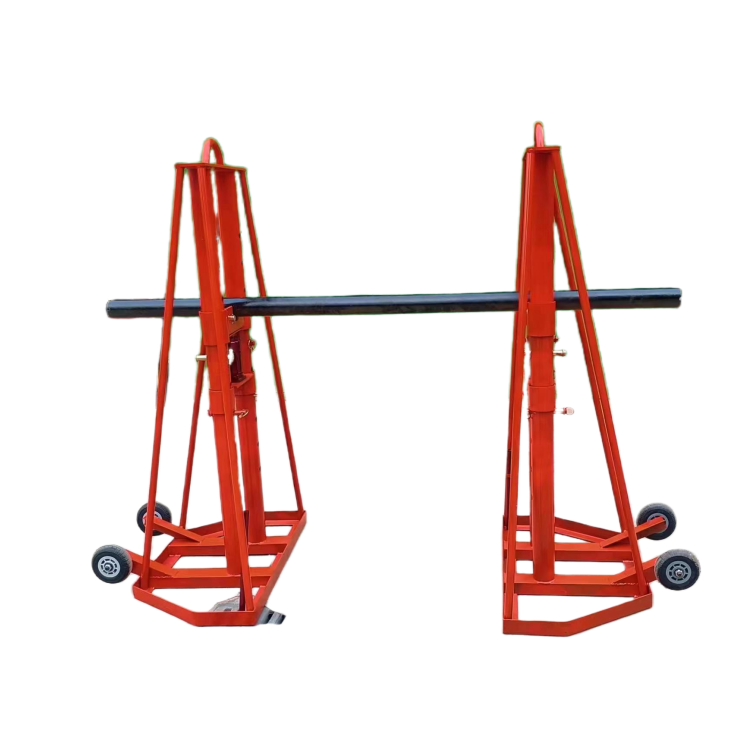
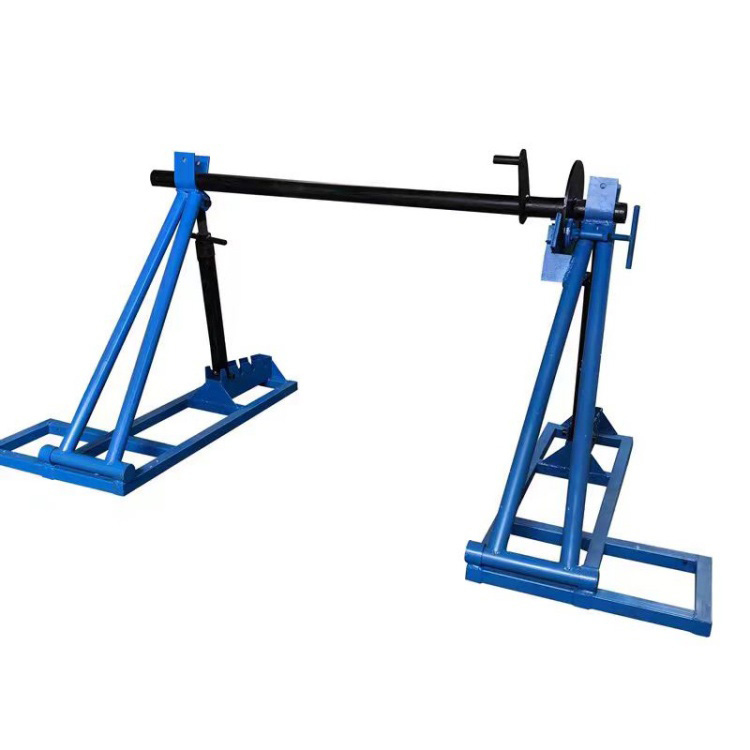
1. Prepare the Worksite Before Setting Up the Cable Reel Stand
Before positioning the Cable Reel Stand, take time to assess the environment and remove potential hazards. A stable ground surface is essential—uneven soil, soft terrain, mud, or debris can tilt the stand and cause misalignment during rotation.
Checklist for site preparation:
·Clear stones, scrap materials, and loose objects
·Ensure the ground is level and strong enough to support the reel weight
·Confirm there is adequate space for installers to move around safely
·Plan the cable route to avoid unnecessary bends and sharp turns
A Cable Reel Stand performs best when positioned in a clean, stable, and open area where the reel can rotate naturally without obstruction.
2. Inspect the Cable Reel Before Mounting
A Cable Reel Stand can only operate smoothly when the reel itself is in proper condition. Before mounting the reel, conduct a quick inspection:
·Check whether the reel flanges are intact and undamaged
·Make sure the cable layers are not loose or distorted
·Verify the reel core is strong enough to hold a lifting shaft
·Confirm the winding direction so you can position the stand correctly
This step prevents issues such as sudden jerks, uneven payout, or cable surface abrasion during operation.
3. Position the Cable Reel Stand Correctly
Positioning is critical for smooth cable deployment. A standard method is to place the two stand supports parallel to each other and adjust the spacing according to the reel width.
Tips for correct alignment:
·Keep both support arms evenly spaced to avoid lateral movement
·Place the stand directly behind or in front of the cable route to minimize twisting
·Ensure the shaft sits securely in the reel’s center holes
·Double-check that the locking mechanisms are engaged
Misaligned stands can cause wobbling, premature friction, and uneven tension, which slows the installation and increases cable wear.
4. Insert the Shaft and Secure the Reel
Once the stand is in position, lift the cable reel using appropriate equipment—such as a reel lifter, forklift, or manual lifting tools depending on reel weight. Carefully insert the metal shaft through the reel’s center and seat it evenly across both sides of the stand.
Key points:
·Ensure the shaft is centered to maintain balance
·Tighten any axle clamps or retaining pins
·Confirm the reel rotates smoothly without wobbling
·Test a short rotation by hand before pulling cable
A balanced and properly secured reel ensures consistent payout without dangerous jumps or snags.
5. Adjust Tension for Smooth Cable Laying
Tension control is one of the most important aspects of using a Cable Reel Stand. Too little tension causes cable loops, tangling, or uncontrolled spinning. Too much tension increases strain, slows the process, and may damage insulation.
To maintain ideal tension:
·Use built-in tension brakes if available
·Increase or decrease tension gradually
·Monitor reel rotation throughout the process
·Keep communication open among workers pulling the cable
Controlled payout protects the cable and improves installation efficiency.
6. Guide the Cable for Proper Routing and Safety
Even with a stable Cable Reel Stand, guiding the cable correctly is essential. Avoid dragging the cable across rough surfaces or sharp edges, and ensure the cable naturally follows the planned route.
Best practices:
·Use rollers, pulleys, or support saddles when laying cables over long distances
·Avoid bending the cable beyond its minimum bending radius
·Keep the cable off the ground whenever possible during heavy construction
·Maintain safe spacing between workers and the rotating reel
Good cable routing minimizes stress and maintains long-term performance in service.
7. Perform a Final System Check Before Continuous Payout
Before beginning full-scale cable laying, perform a final check:
·Confirm the Cable Reel Stand is stable and locked
·Verify the shaft and reel are secure
·Ensure tension is set correctly
·Check the communication between crews at different positions
·Clear the path for the length of cable being deployed
A few minutes of final verification can prevent hours of delays caused by incorrect setup.
Why a High-Quality Cable Reel Stand Makes a Difference
A Cable Reel Stand is more than a simple support structure. Its durability, load capacity, and rotation smoothness directly affect installation success. Stands produced by a Manufacturer with advanced Production capability often feature superior welding, stronger materials, smoother bearings, and more reliable tension systems. Likewise, suppliers offering batch supply ensure consistent quality across multiple units, which is essential for contractors, project teams, and industrial operations that need dependable equipment on every project site.
Conclusion: Proper Cable Reel Stand Setup Ensures Efficient, Safe Cable Laying
A well-set-up Cable Reel Stand dramatically improves cable laying efficiency by providing stable rotation, controlled tension, and safer handling for installation teams. By preparing the site, positioning the stand correctly, securing the reel, and monitoring tension, you achieve smoother, faster, and safer cable deployment. Choosing equipment made by a real Manufacturer with strong Production capability further enhances reliability, especially for operations requiring batch supply or continuous field use.
With the right setup and the right stand, cable laying becomes more efficient, more precise, and far more predictable—every single time.
References
GB/T 7714:Electrical power cable engineering[M]. Crc Press, 2017.
MLA:Thue, William A., ed. Electrical power cable engineering. Crc Press, 2017.
APA:Thue, W. A. (Ed.). (2017). Electrical power cable engineering. Crc Press.