


How to Use a Cable Pulling Sheave Safely and Effectively
Author:jiujiu Release time:2025-11-16 13:58:24 Number of views:175order
In large-scale cable installation projects—whether electrical, fiber-optic, or industrial—the Cable Pulling Sheave is one of the most important tools on site. As a manufacturer with strong production experience and the ability to support bulk supply, we know from years of field feedback that proper sheave operation dramatically reduces friction, prevents cable damage, and increases installation efficiency. Using a sheave correctly is not just a recommendation—it’s essential for protecting your cables, equipment, and workforce.
Despite its simple appearance, a cable pulling sheave performs a complex job: guiding heavy or long cables through routes that may involve elevation changes, tight directional transitions, or abrasive surfaces. Below is a detailed guide on how to operate this tool safely and effectively.

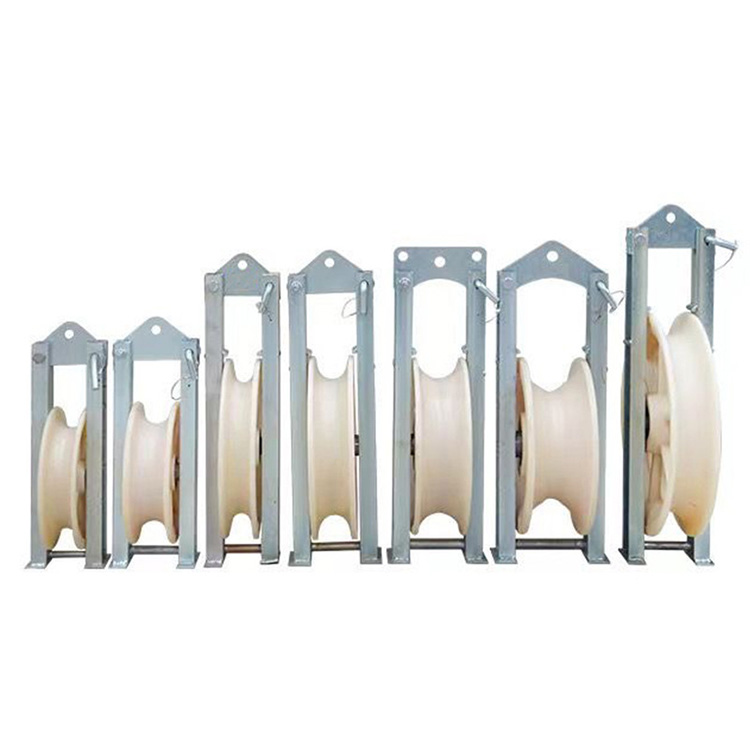
1. Know the Purpose and Function of a Cable Pulling Sheave
A cable pulling sheave is designed to:
·Support the cable during pulling
·Maintain the correct bending radius
·Prevent friction damage to the cable jacket
·Guide the cable through straight runs, corners, or elevation changes
·Reduce drag and pulling resistance
·Improve the accuracy and speed of installations
Understanding these functions ensures you use the sheave as intended and avoid overloading it.
2. Select the Correct Sheave for the Cable and Application
Different jobs require different types of sheaves. Choosing the right model is the foundation of safe operation.
Key selection criteria:
·Wheel size: Must support the cable’s bending radius
·Weight capacity: Should meet or exceed expected pulling tension
·Groove shape: Should match cable diameter
·Material: Steel, aluminum, or polymer depending on cable type
·Mounting style: Hanging, frame-mounted, corner sheave, or straight-line
Using the wrong sheave can lead to cable flattening, jacket tearing, or excessive wear.
3. Conduct a Thorough Pre-Use Inspection
Before any pulling begins, always check the sheave’s condition.
Inspect the following:
·Groove surface: Look for cuts, dents, sharp edges, or corrosion
·Bearings: Ensure smooth rotation without wobbling or vibration
·Axle security: Bolt or pin must be tight and properly aligned
·Frame integrity: Verify there are no bends, cracks, or weld failures
·Mounting hardware: Confirm hooks, anchors, or brackets are secure
A compromised sheave can lead to catastrophic cable failure under tension.
4. Install the Sheave in the Correct Location
Proper positioning ensures the cable follows its intended path with minimal resistance.
Best practices for correct placement:
Align the sheave directly with the pulling direction
·Avoid angles that push the cable against the groove edge
·Ensure the sheave sits on stable ground or a secure mounting point
·Maintain adequate clearance from obstacles, slopes, or other cables
·Use corner sheaves for 45–90° directional changes, not straight-line sheaves
Correct placement minimizes cable abrasion and reduces pulling strain.
5. Keep the Cable Aligned Throughout the Pull
Cable alignment is one of the most important factors in smooth operation.
·Ensure the cable stays centered inside the groove
·Watch carefully for derailment, especially during tension changes
·Avoid twisting or crossing cables prior to pulling
·Monitor the angle continuously as the cable moves
·Adjust the sheave position slightly if misalignment appears
Proper alignment ensures a clean pulling path and prevents unnecessary friction.
6. Monitor Pulling Tension and Avoid Overloading
Every cable pulling sheave has a rated load limit. Going beyond this limit can stress the bearings, deform the wheel, or even cause complete mechanical failure.
Safety guidelines for tension management:
·Use calibrated pulling winches
·Monitor tension levels in real time
·Increase pulling force gradually
·Stop immediately if you hear scraping, grinding, or sudden resistance
·Avoid sharp jerks or shock loads
Safe pulling tension protects both the sheave and the cable.
7. Apply Proper Lubrication and Supporting Tools
While the sheave reduces friction, additional lubrication is often required for long or heavy pulls.
Recommended lubricants:
·Water-based gels
·Polymer-compatible lubricants
·Silicone-based products
Avoid petroleum lubricants unless approved by the cable manufacturer.
Supporting tools to use with sheaves:
·Swivel connectors to prevent cable twist
·Cable grips for secure pulling
·Additional sheaves to create a friction-reducing path
·Tension meters for accurate force monitoring
These accessories help ensure a controlled, efficient pull.
8. Maintain Strict Safety Practices During Operation
Cable pulling can be dangerous, especially under high tension.
Essential safety rules:
·Keep all personnel away from the pulling line
·Wear gloves, hard hats, and protective eyewear
·Never stand in front of or directly behind a tensioned cable
·Keep hands and clothing clear of moving wheels
·Maintain constant communication between pulling teams
·Immediately stop work if the sheave vibrates, squeals, or overheats
Following these protocols minimizes risks and enhances team safety.
9. Clean and Maintain the Sheave After Every Use
Routine maintenance keeps your equipment operating safely.
Post-operation care:
·Remove dirt, mud, or debris from the wheel and frame
·Check bearings for heat buildup or rough rotation
·Inspect the groove for new scratches or surface damage
·Apply lubrication if required
·Store the sheave in a dry, covered place to prevent corrosion
Consistent maintenance extends the lifespan of the sheave considerably.
10. Know When It Is Time to Replace the Sheave
Operating a damaged sheave can cause severe cable damage or on-site accidents.
Replace the sheave if you notice:
·Visible cracks or deformation
·Worn or noisy bearings
·Deep grooves, chips, or sharp edges
·Bent frames or unstable mounting points
·Reduced rotational smoothness
Timely replacement ensures continuous safe operation.
Conclusion
Using a Cable Pulling Sheave correctly is essential for safe, efficient, and damage-free cable installation. From choosing the right sheave and inspecting components to controlling tension, maintaining alignment, and following strict safety practices, each step plays a vital role in the overall success of cable-pulling operations. With our experience as a manufacturer with reliable production capability and bulk-supply support, we understand how proper sheave operation can dramatically enhance performance and reduce installation risks.
References
GB/T 7714:Máté P, Szekrényes A. Measurement of the Tension Loss in a Cable Traveling Over a Pulley, for Low-Speed Applications[J]. Experimental Mechanics, 2024, 64(9): 1579-1599.
MLA:Máté, P., and A. Szekrényes. "Measurement of the Tension Loss in a Cable Traveling Over a Pulley, for Low-Speed Applications." Experimental Mechanics 64.9 (2024): 1579-1599.
APA:Máté, P., & Szekrényes, A. (2024). Measurement of the Tension Loss in a Cable Traveling Over a Pulley, for Low-Speed Applications. Experimental Mechanics, 64(9), 1579-1599.