


Key Components of Heavy-Duty Cable Jack Stands
Author:jiujiu Release time:2025-11-18 15:35:30 Number of views:55order
Heavy-duty Cable Jack Stands are fundamental tools in cable installation, spooling, pulling, and field maintenance work. They serve as stable lifting supports for cable reels, helping technicians elevate and manage heavy loads with precision and control. Whether you’re selecting equipment for demanding job sites or evaluating structural elements as part of a manufacturer’s production workflow, understanding the major components of cable jack stands is crucial for ensuring durability, reliability, and operational safety.
Below is a comprehensive breakdown of the primary components that make heavy-duty cable jack stands indispensable in industrial and utility environments.
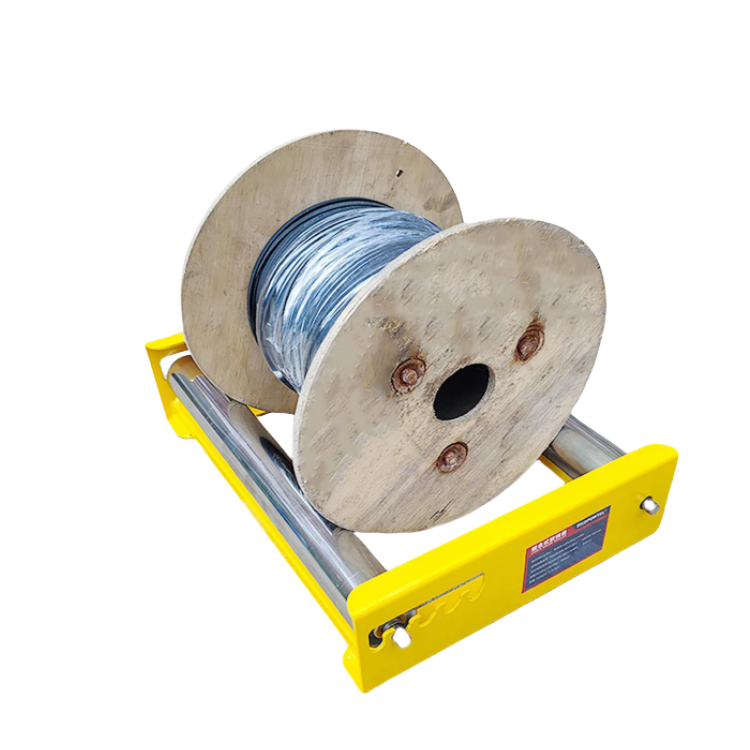
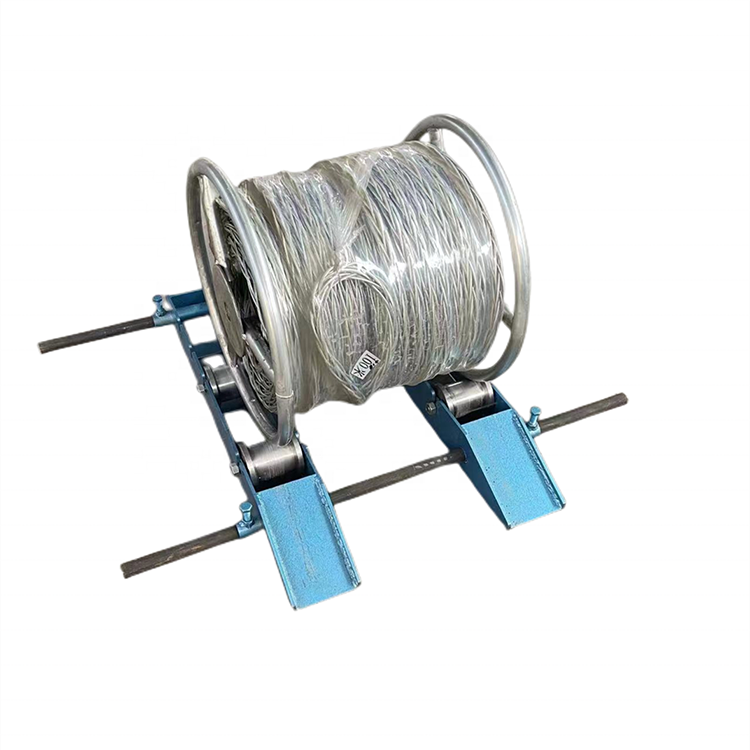
Why Cable Jack Stands Are Essential in Field Operations
Cable jack stands are not just lifting tools; they are engineered structures designed to improve workflow and protect both the workers and the cable reels themselves. When handling oversized power cables, communication lines, control wiring, or underground distribution reels, cable jack stands:
·Reduce manual strain and operator fatigue
·Provide safer lifting control
·Support large reels that cannot be manually managed
·Enable smooth cable dispensing and rewind operations
·Maintain stability on variable terrain
Because many worksites involve uneven ground, long pulling distances, and heavy reel weights, the right combination of components becomes vital.
Primary Components of Heavy-Duty Cable Jack Stands
Below are the structural and functional elements that define the performance capability of cable jack stands.
1. Structural Base Frame
The frame is the backbone of every jack stand. Its geometry and material composition determine how well the stand can handle weight and resist bending forces during use.
Essential frame characteristics include:
·High-strength steel or alloy construction
·A broad footprint to enhance stability
·Welded reinforcement plates to manage torsion
·Corrosion-resistant coatings for outdoor durability
A robust base ensures the entire structure remains steady, even when supporting large cable reels or during aggressive pulling operations.
2. Height Adjustment System
Cable reels vary widely in diameter, which is why height adjustability is one of the most practical design features of heavy-duty cable jack stands.
Adjustment systems may use:
·Screw-jack lifting columns
·Telescopic tubes with locking pins
·Mechanical ratcheting posts
·Integrated leveling pads for uneven ground
This component ensures that technicians can align each reel precisely with pulling equipment or dispensing routes, improving cable handling efficiency and reducing unnecessary tension.
3. Spindle or Axle Rod
The spindle—sometimes referred to as the axle bar—is the part that physically carries the reel. It must withstand the weight of both the reel and the cable wound around it.
A high-quality spindle usually features:
·Solid steel bar construction
·Balanced design for smooth rotation
·Resistance to bending under heavy loads
·Compatibility with multiple arbor sizes
Since the spindle governs how smoothly the reel turns, its engineering quality directly affects the speed, consistency, and safety of cable feeding.
4. Lift Drive Mechanism
For heavier reels, lifting without a drive mechanism is difficult and potentially hazardous. Many jack stands include a built-in system that assists with raising and lowering the reel.
Common drive mechanisms include:
·Manual crank systems
·Gear-assisted lifting drives
·Mechanical jacks
·Hydraulic assistance units
These systems minimize the physical force required from workers and offer precise control during the lifting process, especially when setting up extra-large reels in challenging conditions.
5. Bearing Seats or Reel Support Saddles
Positioned at the top of the stand, these components support the spindle and influence how smoothly the reel turns.
High-grade jack stands may use:
·Roller bearings
·Ball-bearing saddles
·Low-friction metal housings
·Wear-resistant pads
Efficient bearing support ensures that cable is released uniformly, preventing jerks, tension spikes, and sudden movements that could damage the installation or stress the pulling equipment.
6. Safety Locking Features
Heavy-duty cable lifting requires redundancy in safety. Jack stands incorporate mechanical features designed to keep the structure secure during operation.
Common safety elements include:
·Locking pins and bolts
·Anti-slip base plates
·Stabilizing braces
·Position control detents
·Rotation stops
These features are especially important on uneven surfaces or when reels require slow, high-tension pulling during installation.
7. Reinforcement and Load-Rating Elements
Every heavy-duty cable jack stand is engineered to handle specific weight limits. That load rating depends on the internal reinforcements integrated into the design.
Reinforcements may include:
·Thick-gauge metal tubing
·Diagonal bracing for torsional resistance
·Gusset plates at stress points
·Welded structural ribs
Users must always match the reel weight with the manufacturer’s stated rating to avoid structural failure.
8. Mobility and Transport Features
Although strength and stability are priorities, mobility also matters. Job-site crews frequently move jack stands between locations, especially in large-scale construction or utility deployment.
Mobility-related components may include:
·Detachable legs
·Foldable frames
·Lightweight but reinforced steel structures
·Carry handles or lifting points
·Optional wheel kits
Portable designs save time during setup and improve workflow flexibility.
Choosing the Right Cable Jack Stand
Selecting the correct heavy-duty cable jack stand depends on several critical factors:
·Expected cable reel weight
·Required lifting height
·Ground conditions
·Frequency of use
·Reel diameter and arbor size
·Safety requirements
·Environmental exposure
When evaluating equipment as part of a manufacturer’s batch supply or quality-control cycle, engineering teams often examine component strength, weld uniformity, spindle straightness, and load performance under repeated stress tests.
Maintenance and Longevity
Proper maintenance helps extend the lifespan of cable jack stands and ensures safe operation.
Recommended maintenance includes:
·Lubricating bearings and spindle contact points
·Inspecting welds for cracks or metal fatigue
·Cleaning dirt or hardened debris from moving mechanisms
·Tightening all hardware and locking components
·Applying corrosion-prevention coatings if used outdoors regularly
Consistent inspection is especially important for jack stands used in high-duty cycles or long-term industrial environments.
Conclusion
Heavy-duty Cable Jack Stands rely on a well-engineered combination of structural frames, lifting mechanisms, spindles, bearing assemblies, safety locks, and reinforced components to support demanding cable-handling tasks. Understanding each part of the system helps installers, engineers, and production teams identify the right equipment for their operational needs. Whether deployed in field installations or incorporated into product evaluation during manufacturing, every component plays a vital role in ensuring safety, stability, and long-term performance.
References
GB/T 7714:Hao C. Structural Mechanics Analysis of Multi-row Cable Drum of Port Machinery Based on ANSYS Workbench[J]. Academic Journal of Science and Technology, 3(3): 2022.
MLA:Hao, Chen. "Structural Mechanics Analysis of Multi-row Cable Drum of Port Machinery Based on ANSYS Workbench." Academic Journal of Science and Technology 3.3: 2022.
APA:Hao, C. Structural Mechanics Analysis of Multi-row Cable Drum of Port Machinery Based on ANSYS Workbench. Academic Journal of Science and Technology, 3(3), 2022.