


Key Features to Look for in a Quality Cable Drum Stand
Author:jiujiu Release time:2025-11-17 14:00:34 Number of views:156order
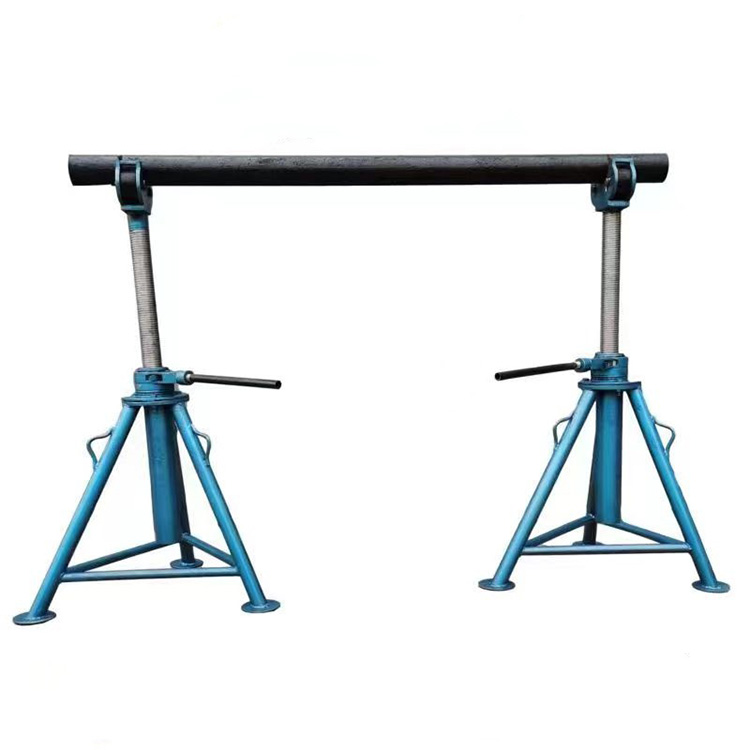
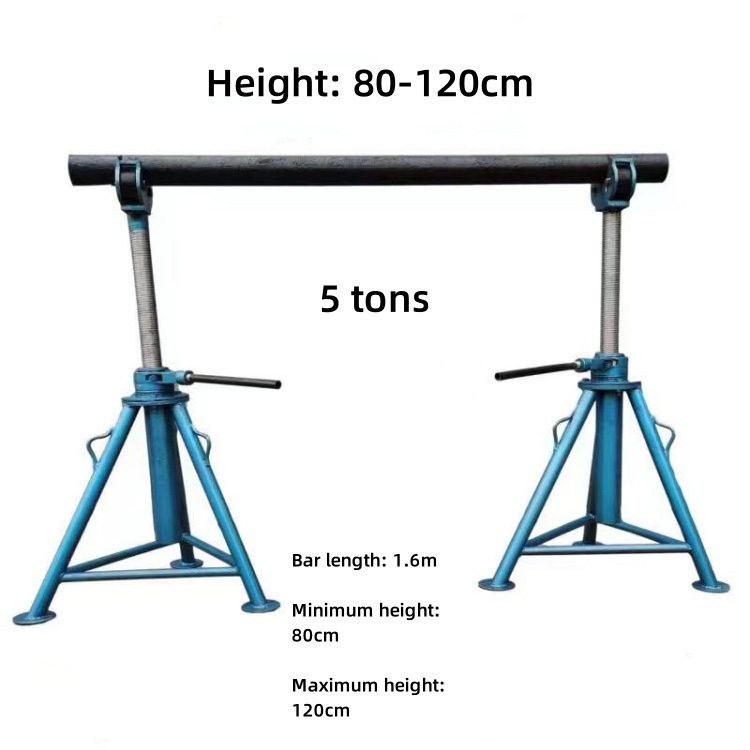
A Cable Drum Stand plays a critical role in any cable-laying, construction, industrial wiring, or power installation project. Whether used for electrical cables, communication lines, or fiber-optic reels, a reliable Cable Drum Stand ensures smooth unwinding, stable load handling, and uninterrupted workflow. Selecting the right stand is not just about convenience—it directly affects safety, installation speed, and project accuracy.
Because the Cable Drum Stand market varies widely in build quality, manufacturing standards, and engineering design, understanding the core features that distinguish a professional-grade stand is essential. Below, we break down the key elements that define a durable, efficient, and field-ready Cable Drum Stand—especially those produced by real Manufacturer-level facilities with advanced Production and batch supply capabilities.
1. Structural Stability and Load Capacity
The very first factor to evaluate in a Cable Drum Stand is its structural reliability. Since many cable drums carry significant weight and rotational torque, the stand must support:
·High static loads
·Sudden dynamic shifts during unreeling
·Uneven terrain or on-site vibration
A well-designed stand typically uses reinforced steel frames, precision-welded joints, and wide-stance support legs. These prevent tipping, wobbling, and deformation. True Manufacturers usually rely on CNC cutting, automated welding, and controlled heat-treatment to maintain consistent structural integrity across every Production batch.
2. Adjustable Spindle or Shaft Compatibility
Cable drums are not standardized globally. Their size, width, and axle hole diameter vary across industries—electrical, telecom, offshore, fiber-optic, mining, and machinery wiring.
A high-quality Cable Drum Stand should offer:
·Adjustable spindle positions
·Multiple shaft diameter options
·Smooth elevation or locking mechanisms
Some stands integrate a screw-jack lift, while others use hydraulic lifting to raise the drum without manual strain. Adjustable compatibility ensures the stand works across a wide range of drum sizes, supporting faster project transitions and minimizing equipment redundancy.
3. Smooth Rotation and Controlled Unwinding
The purpose of any Cable Drum Stand is to enable clean, stable, and tangle-free cable release. Poorly engineered stands create tension spikes or uneven pulling that may damage insulating layers or slow down installation.
Key indicators of a well-engineered stand include:
·Precision-machined bearings
·Smooth, balanced spindle rotation
·Low friction unwind
·Consistent feeding speed
When the stand is produced by an experienced Manufacturer with strong Production standards, the bearings, shafts, and rotation system are typically optimized using automated calibration tools, ensuring the drum turns effortlessly under variable load.
4. Safety Engineering and Reliable Locking Mechanisms
Safety should never be an afterthought. Cable drums carry momentum when spinning, and uncontrolled rotation can be dangerous.
A professional Cable Drum Stand incorporates:
·Non-slip base plates
·Drum locking pins or clamps
·Emergency stop provisions
·Mechanical stability under full load
·Durable surface treatments to resist corrosion
Manufacturers with batch supply capability usually maintain strict testing standards—load tests, drop tests, and anti-corrosion evaluations—to ensure every unit meets field safety requirements.
5. Portability and Ease of Deployment
Installation teams often move Cable Drum Stands across job sites multiple times per project. A practical design should emphasize:
·Foldable structures
·Integrated handles
·Lightweight but durable materials
·Tool-less assembly
·Optional wheel kits
Some advanced stands integrate modular components that can be deployed or packed within minutes. This reduces labor fatigue, speeds up cable-laying, and enhances overall project efficiency.
6. Surface Protection and Outdoor Durability
Cable installations frequently take place outdoors—construction sites, underground cable trenches, wind farms, or industrial plants. Exposure to moisture, UV radiation, mud, and corrosive environments demands high durability.
Quality indicators include:
·Powder-coated or galvanized surfaces
·Abrasion-resistant paint
·Rust-proof spindle components
·Weather-stable footings
Stands manufactured through controlled Production processes often benefit from automated surface-coating lines that create consistent, long-lasting protection across all units.
7. Manufacturer Production Capability and Batch Supply Strength
Perhaps the most overlooked—but most important—factor is the manufacturer’s actual Production capability. A stand made by a fully equipped Manufacturer is significantly more reliable than one assembled by small workshops with inconsistent standards.
Key advantages of a true Manufacturer include:
·Automated Production for structural consistency
·Batch supply capacity for large industrial orders
·ISO-aligned quality control
·Standardized welding and machining
·Strong traceability for each production batch
For distributors, importers, and industrial contractors, batch supply is essential for maintaining inventory stability and ensuring long-term project continuity.
Conclusion: Choosing the Right Cable Drum Stand Ensures Efficiency and Safety
A Cable Drum Stand is far more than a simple support frame—it is a critical tool that influences safety, cable quality, and installation speed. By focusing on structural strength, adjustable compatibility, smooth unwinding, safety engineering, portability, and outdoor durability, you can confidently select a stand that meets professional installation requirements.
And when the stand is backed by a real Manufacturer with modern Production and batch supply capability, you gain not only reliability but also long-term value and supply stability.
References
GB/T 7714:Patrick Neumann W, Dul J. Human factors: spanning the gap between OM and HRM[J]. International journal of operations & production management, 2010, 30(9): 923-950.
MLA:Patrick Neumann, W., and Jan Dul. "Human factors: spanning the gap between OM and HRM." International journal of operations & production management 30.9 (2010): 923-950.
APA:Patrick Neumann, W., & Dul, J. (2010). Human factors: spanning the gap between OM and HRM. International journal of operations & production management, 30(9), 923-950.