


Key Features to Look for in Industrial Cable Rollers
Author:jiujiu Release time:2025-11-16 13:58:24 Number of views:50order
In industrial environments where cable deployment must be precise, safe, and efficient, the quality of your cable roller becomes a deciding factor. As a manufacturer with proven production capabilities and the ability to support bulk supply, we understand that a well-engineered roller can dramatically reduce installation challenges, cable strain, and worksite hazards. Selecting the right roller isn’t only about convenience—it’s about protecting your cables, improving workflow, and ensuring your operation runs smoothly from start to finish.
Industrial cable rollers may look straightforward, but the engineering considerations behind them are substantial. Below are the core features professionals should examine before choosing rollers for construction, utility installation, telecom expansion, or industrial work.
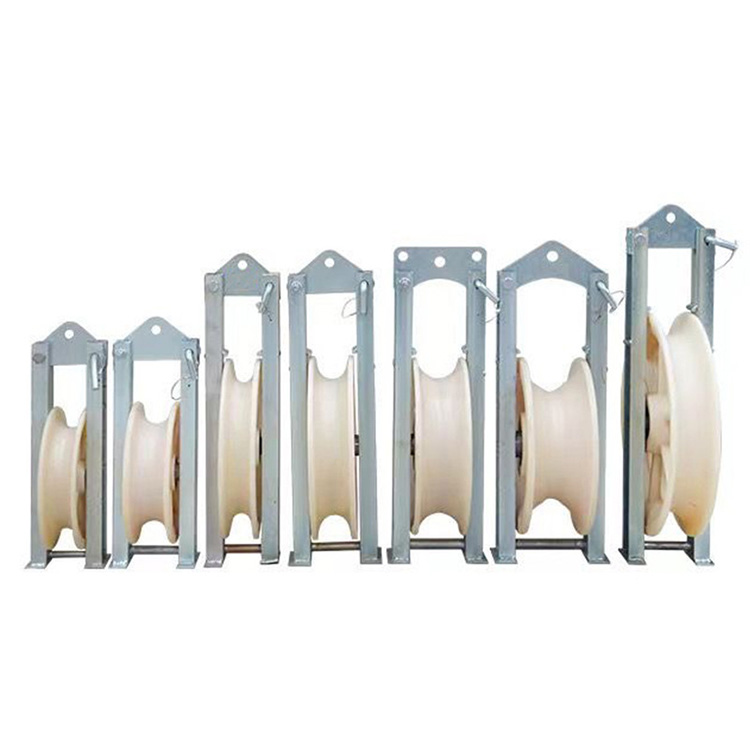
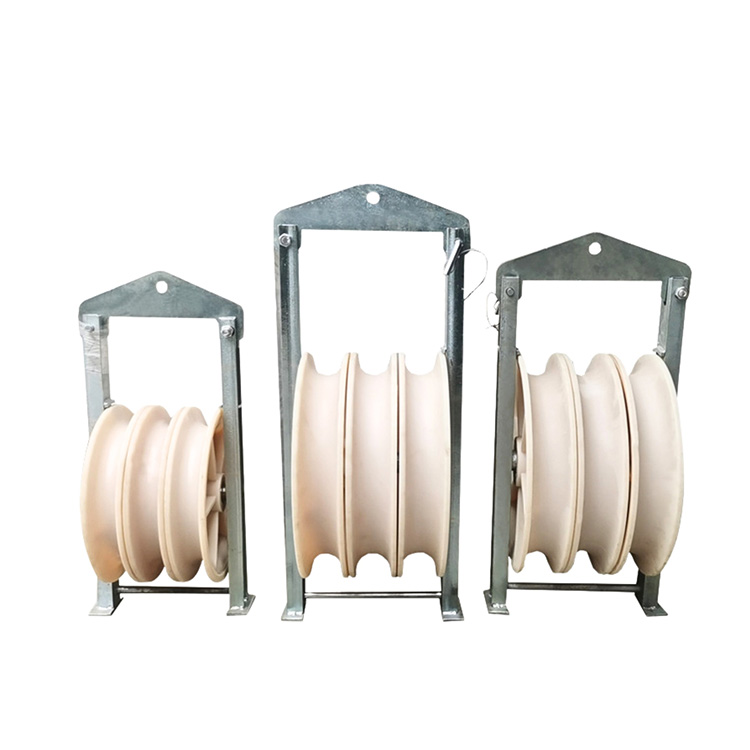
The Importance of Choosing the Right Industrial Cable Roller
A cable roller is more than a supportive tool—it is a structural aid that guides, protects, and stabilizes cables during movement or installation. Inferior rollers can create numerous issues:
·Outer-sheath wear and tear
·Excessive pulling force due to friction
·Unsafe cable bending radiuses
·Misalignment along the pulling path
·Increased worker fatigue and longer job time
The right equipment ensures a controlled pull, reduces mechanical stress, and minimizes the risk of costly cable replacements.
1. Material Durability and Structural Build
Material selection is one of the biggest indicators of a roller’s long-term performance. Durable materials protect the roller from deformation and environmental damage, especially in harsh or abrasive work settings.
Heavy-Duty Steel Frames
High-grade steel frames provide:
·Superior rigidity under heavy loads
·Impact resistance when used on rocky or uneven ground
·Resistance to wear over prolonged use
·Stable performance across construction, mining, and electrical installations
Surface coatings, such as zinc plating or powder coating, further extend durability.
Aluminum Rollers for Mobility
Aluminum rollers strike a balance between strength and lightness:
·Ideal for portable job sites
·Easy repositioning with less manpower
·Suitable for mid-weight cable applications
These rollers are popular in telecom and fiber-optic sectors where mobility is crucial.
Polymer Rollers for Surface Protection
High-density polymer rollers offer:
·Reduced friction
·Non-marking surfaces
·A smooth contact point for more delicate cables
These rollers help maintain cable jacket integrity during long pulls.
2. Load Rating and Frame Stability
Every cable roller has a defined load capacity, and exceeding it can damage both the roller and the cable. Choosing rollers with sufficient structural strength ensures reliable operation.
Evaluate:
·The maximum load a roller can handle
·Thickness and quality of the roller tube
·The axle and bearing size
·Frame stiffness under load
Strong load capacity is essential for thick power cables or long-distance pulls.
3. Bearing Quality and Rotation Smoothness
The bearing system is the core of rolling performance. Without efficient bearings, friction increases, cables drag, and pulling equipment experiences unnecessary strain.
Sealed Bearings
Perfect for industrial or outdoor worksites where contamination is common:
·Resistant to dust, mud, and moisture
·Extended lifespan
·Reduced maintenance
High-Precision Bearings
These provide:
·Smooth, effortless cable movement
·Stable rotation at varying speeds
·Minimized vibration
Reliable bearings make long-distance pulls significantly easier and safer.
4. Roller Geometry and Cable Tracking
Cable rollers come in multiple designs, each suited for specific stages or angles of a cable route. The shape of the roller determines how well it guides the cable.
Straight Rollers
Best for long trench lines or straight-path cable deployment.
Corner Rollers
Designed to protect the cable during direction changes, preventing kinks and flattening.
Triple or Multi-Angle Rollers
Useful in complex paths or uneven terrain where cable alignment varies.
Drum or Reel Rollers
Used to support cable drums, ensuring the cable pays off evenly without twisting or binding.
Choosing the correct geometry reduces unnecessary tension on the cable and helps maintain consistent direction.
5. Surface Treatment and Friction Control
A roller’s surface finish greatly influences how easily a cable moves across it. High-friction rollers increase the load on winches and pulling equipment.
Optimized rollers feature:
·Polished or coated surfaces
·Friction-reducing materials like polymer inserts
·Smooth edges that avoid cutting or marking
·Corrosion-resistant coatings
These factors help preserve the cable’s outer layer, especially during high-tension work.
6. Ground Stability and Operational Safety
Stable contact with the ground ensures a roller stays aligned throughout the pull.
Look for stability features such as:
·Wide-base frames
·Anti-slip legs or ground spikes
·Reinforced joints and welded structures
·Adjustable or height-adaptable systems
Unstable rollers can shift, causing misalignment and increasing the risk of damage.
7. Safety Enhancements
Safety is non-negotiable in industrial operations. High-quality rollers incorporate design features that reduce accidents and protect both workers and equipment.
Key safety features include:
·Anti-jump guards to keep cables locked in place
·Rounded corners for injury prevention
·High-visibility colors
·Heat-resistant materials for high-temperature cable pulls
·Non-sparking surfaces for sensitive environments
Safety-oriented rollers contribute to a more controlled and predictable work process.
8. Weather Resistance and Outdoor Durability
Cable rollers are often used in harsh conditions—sun, moisture, chemicals, and abrasion. A roller must withstand environmental stress to perform consistently.
Seek rollers built to resist:
·UV degradation
·Rust and oxidation
·Corrosive chemicals
·Mud, dust, and high humidity
Durability ensures the roller remains functional and safe after repeated field use.
9. Portability and Storage Convenience
For teams frequently moving across job sites, portability is key.
Desirable features include:
·Lightweight construction
·Integrated carrying handles
·Compact or foldable frames
·Stackable designs for bulk transportation
Efficient handling accelerates workflow and improves job-site organization.
10. Application-Specific Compatibility
Finally, not all cables require the same type of roller. Some specialized applications benefit from custom or purpose-built designs, such as:
·Fiber-optic network installation
·Subsea or marine cable deployment
·Underground power distribution
·Mining and heavy-infrastructure projects
Matching the roller with its intended use ensures optimal performance.
Conclusion
A high-quality cable roller is essential for safe, efficient, and damage-free cable installation. From material strength and load capacity to roller geometry, bearing performance, and safety features, each detail plays a vital role in the overall success of cable handling operations. Backed by our experience as a manufacturer with strong production output and bulk-supply capability, we recognize the importance of choosing rollers that perform reliably under demanding industrial conditions.
References
GB/T 7714:Li Y, Jiang L, Xie M, et al. Advancements and challenges in power cable laying[J]. Energies, 2024, 17(12): 2905.
MLA:Li, Ye, et al. "Advancements and challenges in power cable laying." Energies 17.12 (2024): 2905.
APA:Li, Y., Jiang, L., Xie, M., Yu, J., Qian, L., Xu, K., ... & Wang, Y. (2024). Advancements and challenges in power cable laying. Energies, 17(12), 2905.