


What Is a Polyester Cable Puller and How Does It Work?
Author:jiujiu Release time:2025-11-14 11:30:56 Number of views:149order
In electrical and telecommunication projects, pulling cables safely and efficiently requires the right equipment. One of the most reliable tools used today is the Polyester Cable Puller — a strong, lightweight, and flexible rope specifically designed to guide and pull cables through conduits and ducts.
This article explains what a Polyester Cable Puller is, how it operates, and why manufacturers and contractors rely on it for bulk cable installations and maintenance.
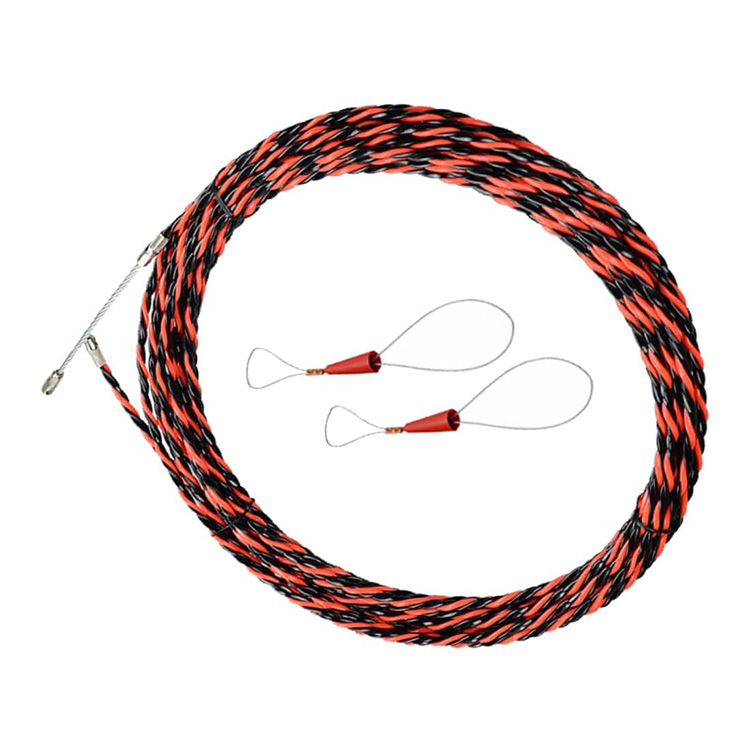
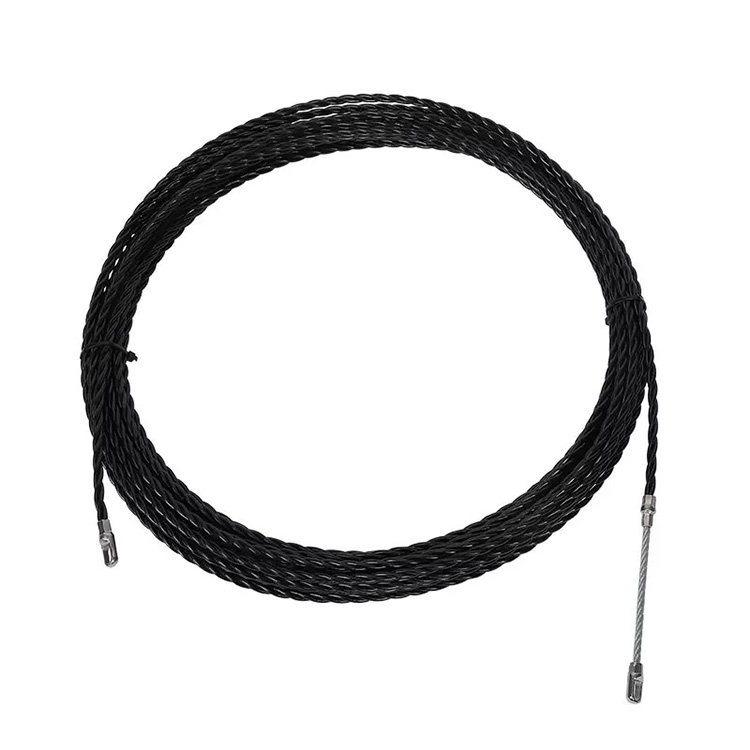
1. Understanding the Polyester Cable Puller
A Polyester Cable Puller is a specially woven rope made from high-tenacity polyester fibers. It serves as the main pulling medium in cable-laying operations, connecting the pulling machine or manual winch to the cable bundle.
Unlike traditional steel wire ropes, polyester versions are non-conductive, lightweight, and resistant to corrosion, making them ideal for electrical applications where safety and flexibility are crucial.
Core Characteristics:
·Material: Industrial-grade polyester yarn
·Structure: Single or double-braided weave for optimal tension control
·Performance: High tensile strength, minimal stretch, and excellent durability
·Applications: Electrical conduit pulling, duct installations, and underground cabling
Professional manufacturers often design these pullers through precision production processes to ensure consistent load performance and abrasion resistance.
2. How Does a Polyester Cable Puller Work?
The working process is simple but requires precision. The Polyester Cable Puller acts as the mechanical link that transfers pulling force from the equipment to the cable.
Typical Operation Steps:
1.Attachment: The cable’s head or grip is firmly tied to one end of the puller.
2.Insertion: The puller is fed through the conduit using a pilot line or vacuum system.
3.Pulling Phase: The pulling system or winch applies gradual tension to draw the cable through.
4.Tension Balance: The rope’s low elongation ensures even stress distribution and prevents cable damage.
The polyester construction gives the rope excellent flexibility and high breaking strength, making it suitable for both short and long pulling distances.
3. Why Choose a Polyester Cable Puller?
Using a Polyester Cable Puller offers numerous advantages that improve installation efficiency, safety, and cost-effectiveness.
a. Strong but Lightweight
Polyester fibers combine high tensile strength with a low overall weight, allowing easy transport and handling on job sites.
b. Safe and Non-Conductive
Because polyester is non-metallic, it poses no electrical conductivity risk, unlike steel ropes. This makes it a safer choice in electrical environments.
c. Weather and Corrosion Resistant
The material resists rust, UV exposure, and moisture, enabling consistent performance even in challenging outdoor or underground conditions.
d. Low Stretch, High Control
Its minimal elongation rate ensures smooth cable feeding and precise tension control, reducing the risk of insulation cracks or conductor deformation.
e. Cost and Longevity Advantages
A durable Polyester Cable Puller can be reused across multiple projects, lowering replacement costs while ensuring consistent performance.
4. Typical Industrial and Utility Applications
The Polyester Cable Puller plays a key role in various installation and maintenance operations, from infrastructure development to industrial power systems.
Common Use Cases:
·Power cable and transmission line installations
·Underground duct and conduit cable pulling
·Data and communication network setup
·Building and factory wiring
·Renewable energy system cabling
In large-scale electrical projects, manufacturers supply these ropes in multiple diameters and tensile strengths to meet specific project loads. Their production lines typically include advanced braiding machines and load-testing equipment to guarantee consistent quality.
5. Choosing the Right Polyester Cable Puller
Not all polyester pullers are the same. Selecting the correct specification is essential for safety and performance.
Key Factors to Consider:
·Breaking Load: Must exceed the cable’s maximum pulling force.
·Diameter: Larger ropes provide higher strength but slightly less flexibility.
·Braiding Design: Double-braided types resist twisting and provide smoother operation.
·Length: Match the total conduit distance to avoid splicing.
·Environmental Protection: Look for UV-resistant and water-repellent coatings.
Proper selection ensures a balance between flexibility and strength, minimizing risk during heavy pulling tasks.
6. Maintenance and Handling Tips
A Polyester Cable Puller will last significantly longer if cared for correctly.
1.Rinse dirt and dust off with clean water after use.
2.Allow the rope to dry completely before storage.
3.Avoid exposure to sharp edges or rough surfaces.
4.Coil the rope neatly without tight bends.
5.Inspect regularly for fraying or fiber wear before reuse.
Routine inspection and careful handling maintain optimal pulling strength and ensure operator safety.
Conclusion
The Polyester Cable Puller is an indispensable component in modern electrical and communication cable installation. Its strength, flexibility, and non-conductive nature make it the preferred choice for professionals handling both light and heavy-duty projects.
For contractors and large-scale installers, partnering with a trusted manufacturer offering reliable production capacity guarantees consistent supply and technical assurance.
With proper selection, maintenance, and usage, a Polyester Cable Puller provides exceptional performance — ensuring safe, efficient, and smooth cable installation across all environments.
References
GB/T 7714:Feng L, Wang Q, Wang S, et al. Experimental Characterization of Stiffness of a Polyester Mooring Rope for a CFPSO[J]. Journal of Marine Science and Engineering, 2024, 12(8): 1435.
MLA:Feng, Limei, et al. "Experimental Characterization of Stiffness of a Polyester Mooring Rope for a CFPSO." Journal of Marine Science and Engineering 12.8 (2024): 1435.
APA:Feng, L., Wang, Q., Wang, S., & Xu, S. (2024). Experimental Characterization of Stiffness of a Polyester Mooring Rope for a CFPSO. Journal of Marine Science and Engineering, 12(8), 1435.