


Why Cable Drum Stands Are Vital for Heavy Cable Handling
Author:jiujiu Release time:2025-11-27 10:08:21 Number of views:84order
The Critical Role of Cable Drum Stands
Handling heavy electrical or communication cables requires precision, control, and reliable equipment. Large cable reels can weigh hundreds or even thousands of kilograms, making manual handling unsafe and inefficient. To manage these challenges, worksites depend heavily on the Cable Drum Stand, a practical yet highly engineered tool designed to support, elevate, and regulate the rotation of cable drums during installation.
Whether used in high-demand utility operations or batch-scale Production settings, a well-built Cable Drum Stand—especially one produced by an experienced Manufacturer—serves as a key component in achieving smooth workflow and maintaining a safer job environment. This article explores the essential functions and advantages that make Cable Drum Stands indispensable.
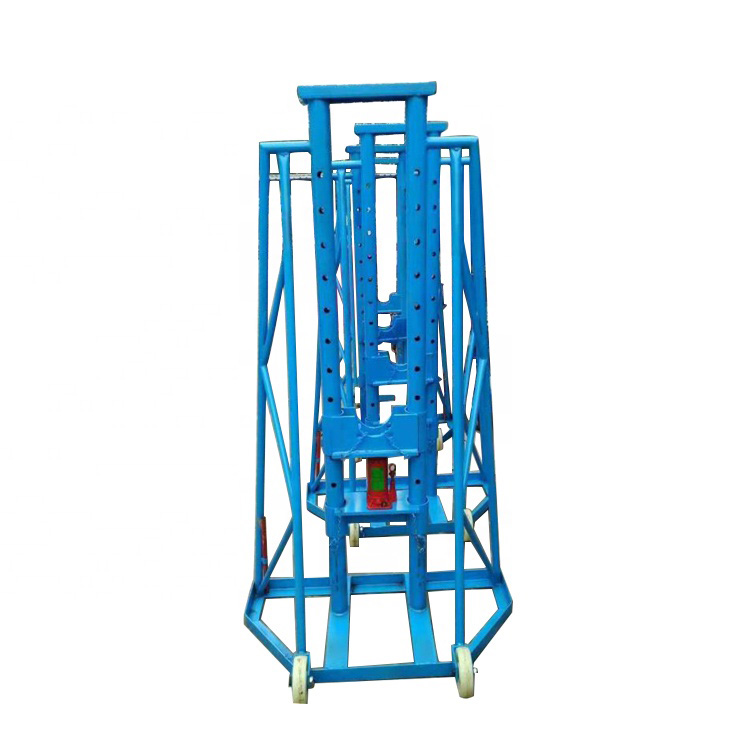
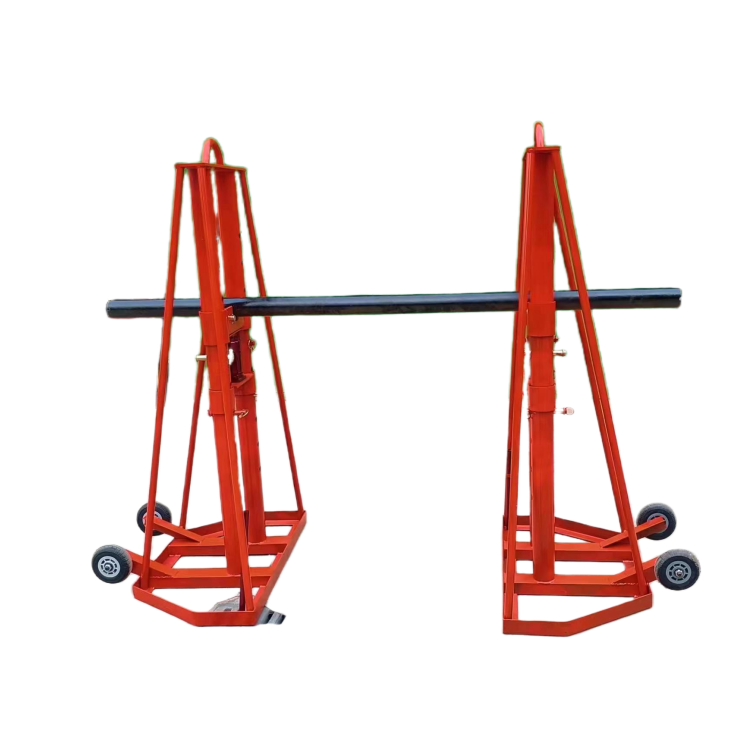
1. Providing a Stable Base for Heavy Cable Reels
The first and most obvious benefit of a Cable Drum Stand is its ability to support substantial loads. Without a stable structure, cable drums can wobble, slide, or tip during movement, creating hazardous situations.
Stands Improve Worksite Stability By:
·Distributing weight evenly across reinforced frames
·Preventing reel roll-away or accidental shifting
·Holding heavy drums at a safe working height
·Minimizing reliance on manual stabilization
Heavy-duty stands are typically constructed with thick steel frames, cross-brace supports, and reliable locking mechanisms—features commonly found in equipment made by industrial-grade Manufacturers.
2. Ensuring Controlled and Safe Cable Unwinding
Unwinding large cables can become dangerous if the reel spins too quickly or unexpectedly. A Cable Drum Stand helps teams maintain controlled, steady release of cable at the desired tension.
Key Functional Advantages:
·Integrated braking systems to regulate speed
·Smooth bearings that support consistent rotation
·Adjustable tension control for different cable types
·Precise alignment that reduces snagging or twisting
This level of control is essential for delicate fiber optics, heavy power cables, and any installation requiring continuous, uninterrupted payout.
3. Reducing Physical Strain and Worker Fatigue
Heavy cable handling is physically demanding. Without proper tools, workers risk injuries such as strained muscles, back damage, and joint stress.
A Cable Drum Stand Helps By:
·Eliminating the need to manually lift or roll heavy reels
·Allowing mechanical lifting tools to position drums safely
·Providing ergonomic working height for pulling cables
·Reducing repetitive, high-stress physical effort
This translates into a safer team environment and fewer worksite accidents associated with manual handling.
4. Supporting Faster and More Efficient Cable Installation
Efficiency is essential in environments where multiple cable reels must be installed in sequence. A Cable Drum Stand simplifies the process and shortens installation time.
Efficiency Improvements Include:
·Quick reel loading and alignment
·Smooth, continuous cable release without snags
·Fewer interruptions due to uncontrolled reel rotation
·Reduced manpower needed for cable management
In large-scale electrical or communication projects, especially those involving high-volume Production or long cable runs, these time savings significantly impact overall project cost and scheduling.
5. Adapting to Different Cable Sizes and Work Conditions
Cable Drum Stands are designed to handle a wide variety of cable reel dimensions and environmental conditions.
Versatility Benefits:
·Adjustable width and height configurations
·Compatibility with multiple shaft diameters
·Suitable for indoor, outdoor, and uneven terrain installations
·Can be paired with lifting equipment for safe drum placement
From utility trenching to industrial machine wiring, the stand’s adaptability makes it one of the most universal tools in cable-handling operations.
6. Minimizing Cable Damage During Installation
Cables must remain intact during deployment to ensure long-term performance. Excess bending, kinking, or dragging can compromise cable insulation or conductive layers.
Cable Drum Stands Reduce Damage By:
·Keeping cables elevated and clean during payout
·Ensuring even tension to prevent deformation
·Supporting straight-line unwinding
·Reducing sharp drag points and friction
Maintaining cable integrity from the beginning is essential, especially for costly power cables, communication lines, and high-specification industrial wiring.
7. Built for Durability and Long-Term Industrial Use
Worksites often expose equipment to heavy loads, rough conditions, and frequent movement. A high-quality Cable Drum Stand must withstand these challenges.
Durability Features Include:
·Heavy-gauge steel or alloy construction
·Robust welding for structural integrity
·Anti-corrosion coatings for outdoor use
·Long-lasting rollers or bearings
·Reinforced bases for maximum load distribution
Equipment manufactured by a skilled Manufacturer typically undergoes strict testing to ensure the stand’s performance remains reliable over years of service.
Conclusion: A Necessary Tool for Modern Cable Handling
A Cable Drum Stand is not just supportive equipment—it is a safety device, a workflow enhancer, and a protection system for expensive cables. By stabilizing heavy reels, regulating unwinding, reducing worker strain, and improving installation efficiency, the stand becomes an essential asset across industrial, construction, and utility projects.
For any operation handling substantial cable loads—especially those within high-frequency installation or continuous Production cycles—a well-built Cable Drum Stand is invaluable.
Safe, efficient, and reliable cable handling begins with the right stand.
References
GB/T 7714:Hallowell M R, Gambatese J A. Construction safety risk mitigation[J]. Journal of Construction Engineering and Management, 2009, 135(12): 1316-1323.
MLA:Hallowell, Matthew R., and John A. Gambatese. "Construction safety risk mitigation." Journal of Construction Engineering and Management 135.12 (2009): 1316-1323.
APA:Hallowell, M. R., & Gambatese, J. A. (2009). Construction safety risk mitigation. Journal of Construction Engineering and Management, 135(12), 1316-1323.