


Powered Cable Pullers and Winches: When Manual Pulling Is No Longer Enough
Author:jiujiu Release time:2026-11-16 17:40:00 Number of views:167order
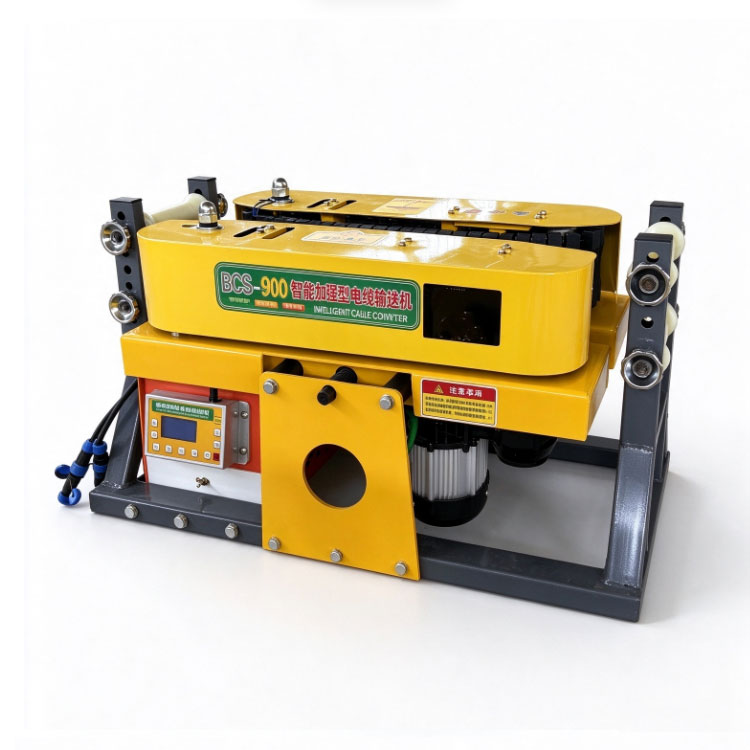
There is a point on every large installation where hands and a draw rope stop being the right answer. The cable is too heavy, the run is too long, or the calculated tension is too close to the cable's limit to trust to a steady human pull. Recognising that point — and specifying a powered cable puller correctly — is what separates a controlled heavy pull from an improvised one.
Signals That Manual Pulling Has Reached Its Limit
Calculated tension approaches the cable's rated maximum. The clearest signal; a powered puller with controlled, monitored force is safer than several people pulling unevenly.
Run length and cable weight make a steady, continuous pull physically impractical.
Large conductor sizes or armoured cable where the mass per metre dominates the tension calculation.
Multiple sequential pulls on the same job, where crew fatigue degrades consistency.
Controlled speed is required — powered equipment delivers constant, even pull speed that manual effort cannot sustain.
Electric or Hydraulic Drive
| Drive Type | Characteristics | Typical Application |
|---|---|---|
| Electric | Clean, straightforward power supply, easy speed control | Plant rooms, industrial sites, indoor and urban work with available power |
| Hydraulic | High force in a compact package, smooth under variable load | Heavy utility and transmission work, remote sites with hydraulic power available |
| Portable winch units | Transportable, flexible mounting | Municipal work, road crossings, distributed access points |
| Capstan and drum pullers | Continuous pull over long lengths | Long runs where rope management matters as much as force |
How Pull Force Is Specified
Pull force ratings for powered equipment commonly run from roughly 500 kg to 2000 kg and above. Selecting the rating is not simply a matter of taking the largest available:
Rate above the calculated tension, with margin. Equipment operating near its limit leaves no room for the unexpected.
Rate below the cable's maximum. The purpose of powered equipment is controlled force, not maximum force — and an over-powered machine can destroy cable faster than any manual pull.
Match rope length to the run plus working slack at both ends.
Confirm the rope and grip ratings are consistent with the machine's pull force; the weakest component governs the system.
Verify the power supply available on site is compatible and adequately rated.
Critical point: powered pulling removes physical effort, not responsibility. Tension monitoring is more important with a machine than without one, because a machine will keep pulling through a problem that a person would feel and stop for.
Safety Controls Required on Powered Pulls
Tension monitoring with a defined limit and an automatic or procedural stop at that limit.
Clear communication between the machine operator and the feed-end operator — radio or hand signals agreed before starting.
Exclusion zones along the pull line; a rope or grip failure releases energy along its full length.
Emergency stop accessible to the operator at all times.
Secure anchoring of the machine, pulleys and any snatch blocks against the pull direction.
Inspection of rope, grips and swivels before every pull; retire damaged items rather than derating them informally.
Controlled speed — start slowly, run steadily, stop smoothly.
Integrating Powered Pulling with the Rest of the Toolkit
A powered puller is the last link in a chain that begins at the duct:
Fiberglass duct rodder proves the path and installs the pilot line — the machine cannot pull through a duct nobody has verified.
Duct brushes and pigs clean the run so friction does not inflate the required force.
Cable reel stand with a brake presents the cable in line and controls pay-off speed.
Cable pulleys at every bend keep tension and sidewall pressure within limits.
Pulling lubricant reduces the force the machine must deliver.
Swivels and matched grips connect the system safely.
Specifying all of these together is what makes a heavy pull routine: the machine supplies the force, and the rest of the system keeps that force from becoming damage.
Selection Checklist
Calculated pulling tension for the longest, most bend-heavy run
Cable maximum rated tension and minimum bend radius
Required pull force with margin, and rope length
Power source available on site and duty cycle expected
Mounting and anchoring arrangement at the pulling end
Tension monitoring and emergency stop provision
Operator training and communication plan
Specify a pulling system, not just a machine
We supply cable pulling equipment as a matched system — fiberglass duct rodders for proving and pilot lines, reel stands with brakes, pulleys and heavy pulleys, swivels and grips, and powered puller options rated to your calculated tension. Send us your cable type, run length and bend count.