


Small-Diameter Fiberglass Duct Rodder: The Right Tool for Indoor Conduit and Tight Bends
Author:jiujiu Release time:2026-11-18 17:49:27 Number of views:164order
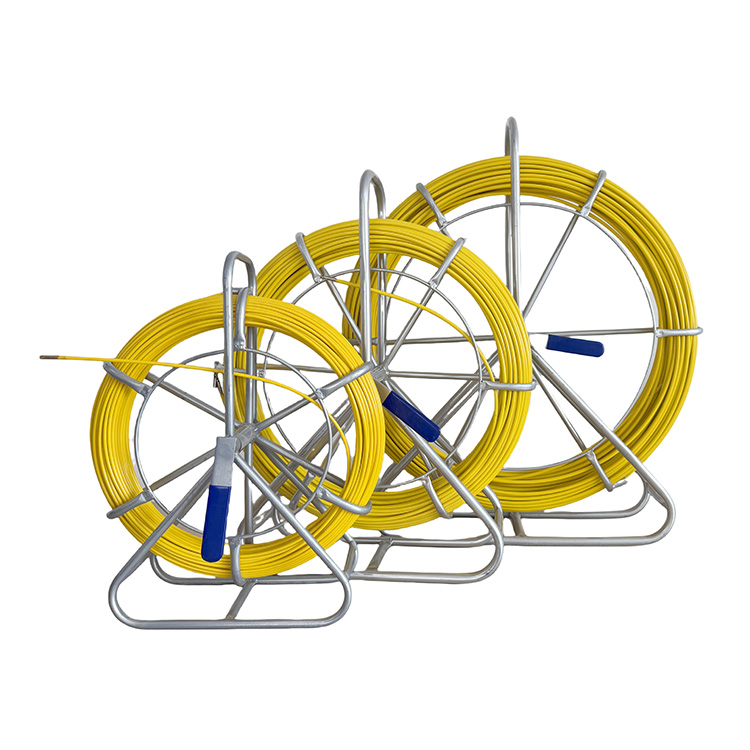
Long-distance duct work is a pushing-force problem; indoor conduit work is a bend problem. A riser with six 90-degree bends, a series of offsets and two junction boxes asks for flexibility, not column stiffness. Specifying a small diameter duct rodder in the 4.5 mm to 8 mm range for that work is not a compromise — it is the specification that actually matches the route.
What Makes Indoor Conduit Different
Building and campus conduit differs from underground duct in three ways that change tool selection:
Short runs, many bends. Typical runs are 20 m to 80 m, but direction changes are frequent and often tight.
Smaller conduit bore. 20 mm to 50 mm conduit leaves little clearance for a bulky rod or a large head fitting.
Occupied environments. Live circuits, finished surfaces and limited working space mean the tool must be light, controllable and safe.
In this environment a large rod is actively counter-productive: it resists bending, binds at the first offset, and transmits the operator's effort into the conduit fitting rather than into forward travel.
Choosing a Diameter for Tight Work
| Diameter | Typical Reach | Bend Performance | Best Used For |
|---|---|---|---|
| 4.5 mm | 30 m - 70 m | Passes very tight bends and small bore conduit | Residential wiring, retrofit, occupied buildings |
| 6 mm | 50 m - 100 m | Excellent flexibility with usable pushing force | Commercial risers, data and communications runs |
| 8 mm | 80 m - 150 m | Balanced flexibility and stiffness | Campus buildings, mixed indoor and short outdoor sections |
| 10 mm - 11 mm | 150 m - 250 m | Less tolerant of tight bends | Transition to outdoor duct and distribution runs |
Specifying rule: choose the smallest diameter that will still reach the far end. Extra diameter buys pushing distance you do not need indoors, and costs you the bend tolerance you do.
Why Flexibility Beats Raw Stiffness Here
A pultruded E-glass rod stores elastic energy as it bends and releases it as it straightens. That behaviour is what lets a small rod walk through a sequence of offsets: each bend is absorbed and recovered rather than accumulated into a permanent set. A stiffer material, or an oversized rod, meets the same geometry by binding — and a bound rod invites the operator to push harder, which is how conduit fittings and rod ends get damaged.
Head Fittings Matter More at Small Diameter
Because the bore is tight, the head is often the limiting factor rather than the rod:
Spring leader heads — a flexible tip leads the rod around bends and offsets without catching on joint shoulders.
Roller guide heads — centre the rod in the conduit and reduce friction at bends; useful on longer indoor runs.
Compact bull-nose pulling eyes — keep the profile small so the assembly will not hang up in small bore conduit.
Light draw ropes — match the rope to the rod's pulling capacity; a heavy rope defeats the purpose of a light rod.
Handling and Reel Considerations
Small-diameter rodders are light enough for one-person operation, which is a genuine productivity advantage in occupied buildings and plant rooms. The reel and frame should reflect that:
Compact frame that fits through doorways and onto lifts.
Brake still required — small rods can overrun and tangle just as easily as large ones.
Rubber wheels and a carry handle for stairs and plant-room access.
A feed device that allows controlled pay-out and smooth rewind.
Technique for Multi-Bend Routes
Start with a spring leader head; fit a roller guide if the run is long.
Feed slowly and steadily — speed causes the rod to bunch at the first bend.
When resistance is met, withdraw 300-500 mm, rotate the rod a quarter turn, and re-feed.
Use the metre marking to log where resistance occurred; repeated stops at the same distance indicate a fitting problem, not a technique problem.
Once through, attach the draw rope with a swivel and pull back smoothly.
Reel the rod back in under light tension, wiping it clean as it returns.
Where the Small Rodder Stops Being the Right Tool
The transition point is practical rather than theoretical. When runs exceed roughly 80 m to 100 m, when the route includes long straight outdoor sections, or when the cable being pulled is heavy power cable, the small rod begins to buckle before reaching the far end. At that point the correct move is a second tool — an 11 mm or larger rod on a heavier frame for outdoor and long runs — rather than forcing a small rod beyond its design range.
Most contractors end up with both. Each is inexpensive relative to the labour it saves, and together they cover the full range of work a mixed crew encounters.
Equip your indoor crews correctly
A small-diameter fiberglass duct rodder in 4.5 mm, 6 mm or 8 mm, fitted with spring leader and roller guide heads on a compact braked reel, covers the majority of building and campus conduit work. Tell us your conduit bore and typical bend count and we will specify rod length and head set.