


How to Inspect and Clean Conduit with a Fiberglass Duct Rodder Before Cable Pulling
Author:jiujiu Release time:2026-10-29 16:08:12 Number of views:111order
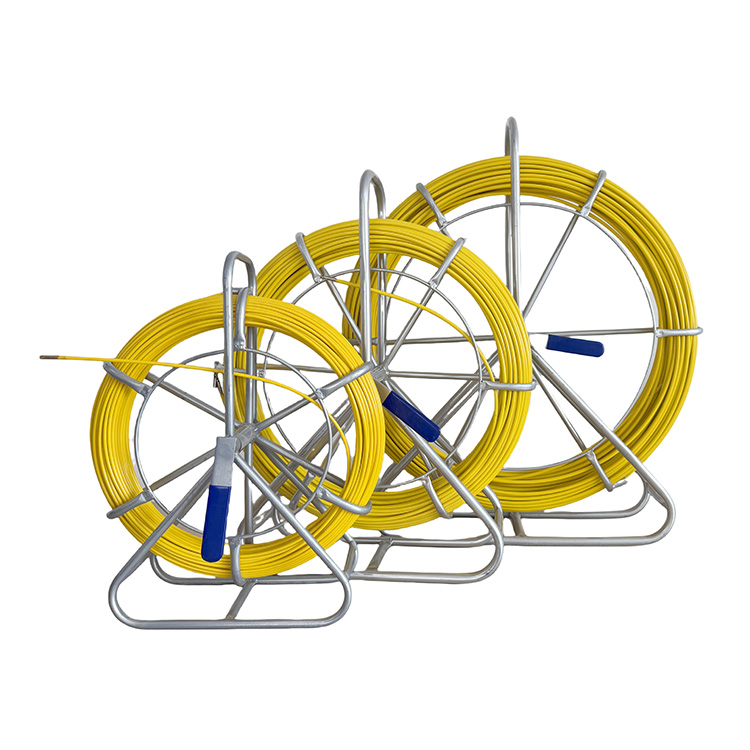
The most expensive cable pull is the one that stalls halfway, with several hundred metres already committed to the duct. In most cases the cause was known in advance: silt, a crushed section, or a joint offset that nobody checked. A fiberglass duct rodder is the tool that makes conduit inspection and duct cleaning a ten-minute routine instead of an afterthought.
Why the Pre-Pull Sequence Exists
New duct collects construction debris; existing duct collects silt, roots and, in municipal networks, the residue of previous cable removals. Any of these raises friction, which raises pulling tension, which is what damages cable. The sequence below costs a few minutes and removes the largest single source of pull failure:
Rod the path to prove continuity.
Clean the duct with brushes or pigs sized to the bore.
Verify with a second pass, a mandrel or a duct camera.
Pull with lubricant, pulleys and monitored tension.
Step 1: Rod the Path
Feed the rod from the reel using the brake to control payout, and let the rod's own flexibility find the route. Read resistance carefully:
Smooth, steady progress — the duct is clear.
Repeated stop at the same distance — a local obstruction or joint offset; note the distance from the rod's metre marking.
Sudden free travel — possible fracture or an open joint.
Rod will not advance at all — likely a collapse; do not force it.
Rotating the rod slightly and re-feeding often walks it past minor offsets. Forcing it does not — it risks splintering the rod inside the duct, which turns a simple obstruction into a recovery operation.
Step 2: Clean the Duct
| Accessory | Purpose | When to Use |
|---|---|---|
| Duct brush | Scrubs silt and soft deposits from the bore wall | Standard pre-pull cleaning; first pass |
| Cleaning pig / foam swab | Wipes the bore and pushes debris ahead of it | Final pass after brushing; wet or greasy residue |
| Mandrel / proving plug | Verifies minimum bore and detects deformation | Before pulling large-diameter or stiff cable |
| Roller guide head | Centres the rod and reduces friction at bends | Long runs with multiple direction changes |
| Spring leader head | Leads the rod past bends and offsets | Tight conduit and multi-bend indoor routes |
Fit the accessory to the rod's threaded pulling eye, pull it back through the run in the direction of the intended cable pull, then repeat until it comes back clean. On long runs, clean from both ends toward the middle.
Practical rule: clean until the brush returns visibly clean. One pass is rarely enough on older duct, and the second pass costs less than one minute.
Step 3: Verify Before Committing Cable
Once clean, confirm the duct will accept the cable. A proving mandrel of the correct diameter should pass freely; a duct camera gives visual confirmation of joint condition, water ingress and deformation. Where the network will be documented, a traceable duct rodder with an internal copper conductor lets the crew map the route from the surface at the same time — survey and proof in a single pass.
Step 4: Pull with Control
Mount the drum on a cable reel stand with a brake, aligned with the pull direction.
Place cable pulleys at every bend, junction and mid-run support point.
Apply pulling lubricant compatible with the cable jacket.
Connect rod to cable through a breakaway swivel and a grip matched to the cable type.
Monitor tension throughout; stop on any unexplained spike and investigate.
Post-Pull Housekeeping
The job is not finished when the cable lands. Wipe the rod clean as it is reeled back in — grit left on the jacket abrades it during storage and shortens service life. Inspect the jacket for cuts, check the pulling eye for thread damage, confirm the brake still holds, and store the reel out of prolonged direct sunlight. Rods rated to -40 °C to +60 °C and tested to 12,500 bending cycles will deliver a long service life, but only if they are cleaned and stored properly between jobs.
Building a Duct Preparation Kit
Fiberglass duct rodder sized to your longest run (traceable option where routes are undocumented).
Brush set and pigs covering the duct diameters you work in.
Proving mandrels for each conduit size.
Spare pulling eyes, spring leaders and roller guide heads.
Pulling lubricant, gloves and a tension meter.