


Cable Pulling Safety: Essential Rules Every Installation Team Must Follow
Author:jiujiu Release time:2026-09-07 17:57:35 Number of views:104order
Why Cable Pulling Safety Matters
Cable pulling involves heavy equipment, high tension forces, confined spaces, and often electrical hazards. Without proper safety practices, cable installation crews face risks including:
Electrocution from contact with energized lines or conductive tools
Crush injuries from cable reels, winches, and tensioned lines
Hand and finger injuries from pinch points and cable snaps
Back strain from manual lifting of heavy reels and equipment
Eye injuries from whipping cable ends and debris
Falls while working at heights or near open manholes
Every one of these injuries is preventable with the right equipment, training, and procedures.
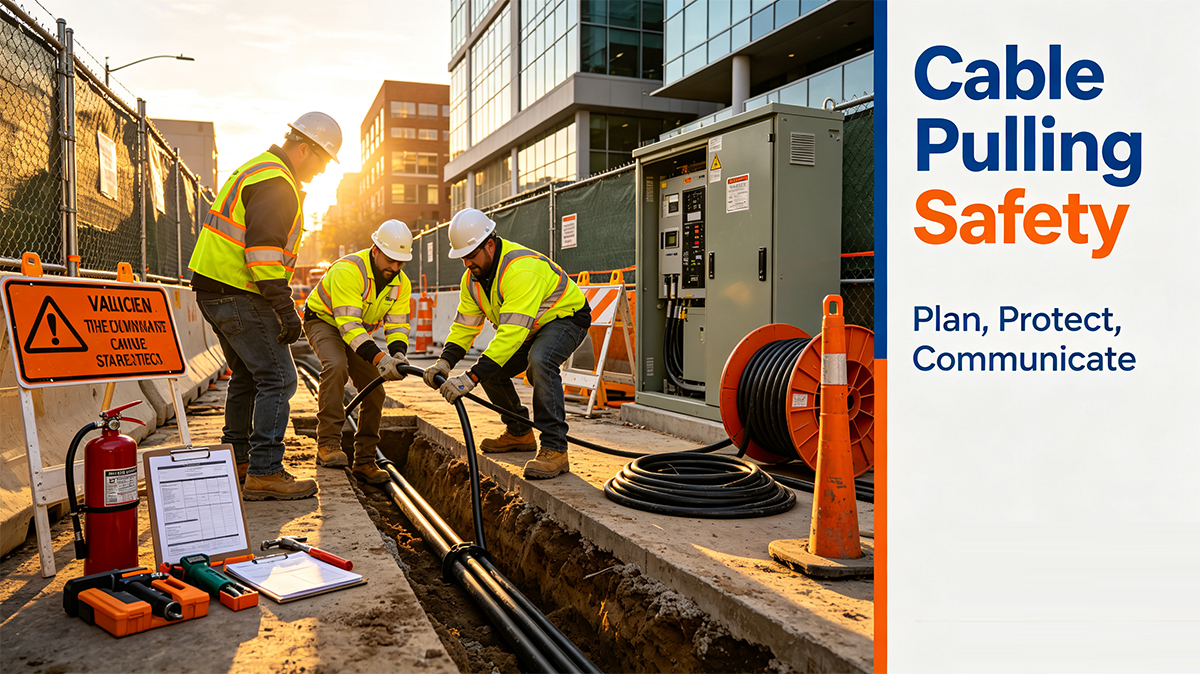
Required Personal Protective Equipment (PPE)
| PPE Item | When Required | Purpose |
|---|---|---|
| Safety glasses / goggles | All pulling operations | Protect eyes from whipping cable, debris, and lubricant spray |
| Cut-resistant gloves | Handling cable and rodder | Protect hands from fiberglass splinters and sharp cable edges |
| Hard hat | Job sites with overhead hazards | Protect from falling objects and low clearance impacts |
| Steel-toe boots | All job sites | Protect feet from falling reels and heavy equipment |
| High-visibility vest | Roadside or traffic areas | Ensure workers are visible to vehicles and equipment |
| Fall protection | Working at heights >1.8m | Prevent falls from ladders, platforms, and poles |
Electrical Safety Rules
⚠ Rule #1: Assume all lines are energized. Never assume a cable or line is de-energized because it "should be." Verify with a voltage tester before touching or pulling near any conductor.
Use non-conductive fiberglass tools (duct rodder, fish tape, telescopic poles) when working near electrical installations
Maintain minimum approach distances to overhead power lines — check local regulations (typically 3m+ for low voltage)
Never use metal fish tape or steel tools where contact with live conductors is possible
Inspect all electrical tools and extension cords for damage before use
Use GFCI-protected power sources for all powered equipment
Only qualified electricians may work on energized systems — and only with proper authorization and PPE
Equipment Inspection & Safe Use
Before Every Pull:
Inspect the duct rodder — check for cracks, splinters, and damaged tips
Verify the cable reel stand is stable and the brake works correctly
Check all pulleys — wheels must rotate freely with no cracked grooves
Confirm pulling grips are the correct size for the cable and in good condition
Inspect winches and tension meters — verify calibration and safety shutoffs
Ensure all connections between rodder, grip, and cable are secure
⚠ Never stand in line with a tensioned pulling line. If a grip or connector fails, the line whips with tremendous force. Stand to the side, never in front of or behind the pull path.
Ergonomics & Manual Handling
Lift with your legs, not your back — or better, use mechanical lifting aids for reels over 25kg
Use a cable reel stand to eliminate manual handling of heavy reels
Two-person lift for anything over 25kg; use a forklift or hoist for reels over 50kg
Take regular breaks during long pulls to prevent fatigue-related mistakes
Rotate tasks so no single worker performs continuous heavy pulling
Keep the work area clear of trip hazards — hoses, tools, and cable loops
Job Site Safety
Barricade open manholes and excavations; use covers when unattended
Set up traffic cones and signage for roadside work
Establish clear communication signals between pull teams (verbal, radio, or hand signals)
Designate a safety observer during powered pulls
Keep unauthorized personnel clear of the pulling area
Check weather — postpone pulls during lightning, high winds, or extreme heat
Have a first-aid kit and emergency contact list on site
Pre-Pull Safety Checklist
☐ All PPE worn correctly by all team members
☐ Voltage verification completed where applicable
☐ Equipment inspected and in good condition
☐ Pull path clear of personnel and obstructions
☐ Communication signals agreed and tested
☐ Tension monitoring equipment ready
☐ Manholes and excavations safely barricaded
☐ First aid kit and emergency contacts available
☐ Weather conditions safe for the operation
Frequently Asked Questions
Q: What is the safest tool for pulling cable near live electrical equipment?
A: Fiberglass tools — specifically non-conductive FRP duct rodders and fiberglass fish tapes. They provide electrical insulation and eliminate the shock risk of steel tools.
Q: How often should pulling equipment be inspected?
A: Visually inspect before every use. Conduct a detailed monthly inspection of all equipment including reel stands, pulleys, grips, and winches. Replace any damaged components immediately.
Q: Can one person safely pull cable alone?
A: For short, low-tension pulls, experienced workers can operate solo with proper PPE and equipment. For any pull over 50m, involving powered equipment, or working near electrical hazards, a minimum two-person team is required.