


Cable Reel Handling: Safety and Best Practices for Moving Cable Drums
Author:jiujiu Release time:2026-09-19 22:46:53 Number of views:161order
Why Reel Handling Matters
Cable reels (drums) are among the heaviest items on any cable installation job site. A full drum of power cable can weigh 500kg to several tons. Improper handling causes:
Serious injuries — crushed limbs, back injuries, and fatalities from falling reels
Cable damage — dropped reels kink and crush cable layers, ruining the entire drum
Project delays — damaged reels and injured workers stop the job
Equipment damage — bent flanges and broken stands
Safe reel handling is non-negotiable — it protects both your crew and your materials.
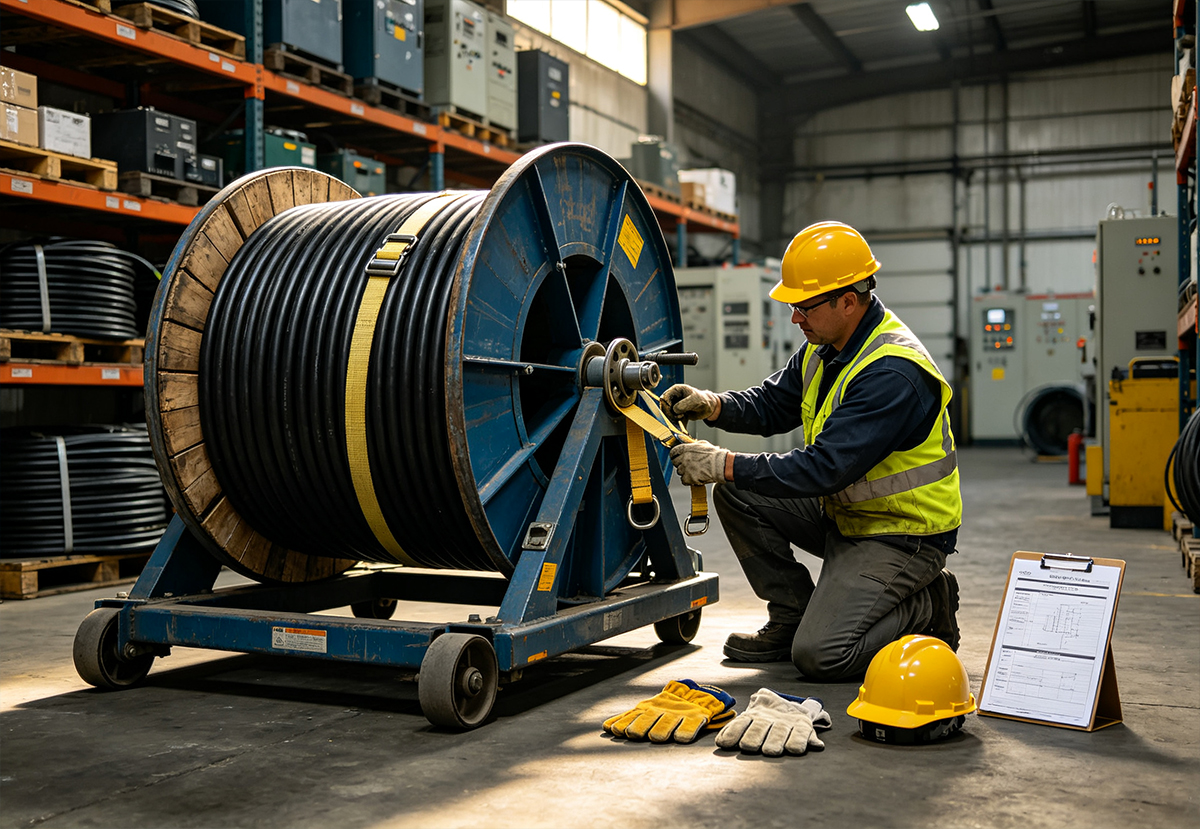
Understanding Reel Weights
| Reel Type | Typical Weight Range | Handling Method Required |
|---|---|---|
| Small reel (data cable) | 5-25kg | One person, manual |
| Medium reel (coax, small power) | 25-100kg | Two people or reel dolly |
| Large reel (power, telecom trunk) | 100-500kg | Reel stand/jack, forklift, or crane |
| Heavy industrial reel | 500kg - 3 tons+ | Crane, forklift, or hydraulic lift |
⚠ Hard Rule: Never manually lift reels over 25kg alone, and never attempt to roll or tip heavy reels by hand. If you can't use mechanical lifting, you need more people — or a better plan.
Safe Lifting Techniques
Manual Lifting (reels under 25kg)
Bend at the knees, keep the back straight, and lift with the legs
Hold the reel close to your body
Use two people for anything over 25kg
Wear cut-resistant gloves — reel flanges can have sharp edges
Mechanical Lifting (reels over 25kg)
Reel jacks: Insert a shaft through the center bore, lift with hydraulic jacks on both ends
Forklifts: Use fork extensions or a reel fork attachment; never lift a reel by its flanges with standard forks unless rated for it
Cranes/hoists: Use a reel lifting beam or spreader bar with slings through the center bore
Never stand under a suspended reel — ever
Reel Stand Setup
Once the reel is lifted, proper placement on a cable reel stand is critical:
Match the axle to the bore: Use the correct axle diameter for the reel's center bore
Check the stand rating: Stand capacity must exceed the reel's gross weight by at least 25%
Level the stand: Use leveling jacks or shims on uneven ground
Lock the brake: Engage the brake before loading; release only when ready to pay out
Verify alignment: The reel must rotate freely and be aligned with the cable pull direction
Clear the area: Keep hands and feet clear of the reel path during rotation
Safe Cable Unwinding
Golden Rule: Always pull cable off the top of the reel. Never let cable pay off the bottom or run across the ground from a stationary reel — this creates kinks and twist.
Maintain slight brake tension to prevent free-spinning (overrun causes cable bird-caging)
Keep cable aligned with the duct entry using a guide pulley
Never let personnel stand on or straddle the cable path
Watch for snags — stop immediately if cable catches on the flange
For long pulls, monitor reel rotation continuously for even payout
Transport & Securing
Secure reels upright: Transport reels standing on end (flange flat) or on a reel caddy designed for trucks
Block and brace: Use chocks, straps, and braces — a 500kg reel becomes a deadly projectile in a collision
Use reel cradles: V-shaped cradles or purpose-built reel racks prevent rolling during transit
Check straps en route: Re-tension tie-downs at stops — straps loosen as loads settle
Unload carefully: Never drop reels from the truck bed; use a liftgate, ramp, or crane
Storage Best Practices
Store upright: Reels should be stored on their flanges, not on their sides — side storage distorts cable layers
Protect from weather: Cover cable ends to prevent moisture ingress; store indoors when possible
Keep off the ground: Use pallets or racks to keep reels dry and pest-free
First-in, first-out: Rotate stock so older cable is used first
Leave the last layer: Never fully unwind a reel — leave at least one wrap to protect the cable end
Label clearly: Mark remaining length and lot numbers on each reel
Daily Reel Handling Safety Checklist
☐ Reel weight known and handling method confirmed
☐ Lifting equipment inspected (jacks, slings, forks)
☐ Reel stand rated for the load and properly assembled
☐ Axle size matches reel bore
☐ Brake tested and functional
☐ Reel inspected for damage (cracked flanges, loose lagging)
☐ Work area clear of personnel and trip hazards
☐ PPE worn (gloves, steel-toe boots, safety glasses)
Frequently Asked Questions
Q: How do I know if a cable reel is too heavy to handle manually?
A: As a rule, any reel over 25kg requires mechanical assistance or a two-person team. If you have to strain or question whether you can lift it, use equipment instead.
Q: Can a dropped cable reel be used?
A: Inspect thoroughly first. If the flanges are bent or the cable shows crush damage, kinks, or jacket cuts, the affected section must be cut out and discarded. When in doubt, consult the cable manufacturer.
Q: What is "bird-caging" and how do I prevent it?
A: Bird-caging is when cable layers loosen and fan outward on the reel — caused by free-spinning overrun or improper tension during winding. Prevent it with brake control during payout and proper tensioning during rewinding.