


Polyester Cable Puller: Features, Applications, and Buying Guide for Efficient Cable Installation
Author:jiujiu Release time:2026-04-30 19:59:45 Number of views:160order
Polyester cable pullers serve as indispensable hand tools for electrical and communication cable laying work. Professionally engineered to assist construction workers in threading and pulling cables through conduits, ventilation ducts and buried pipelines, they boost construction efficiency and operational safety. Different from conventional steel wire pullers, polyester pulling tools deliver obvious edges in weight, softness, insulation and anti-corrosion performance, becoming the mainstream option for current cable installation tasks. This paper focuses on the basic definition, core performance features, common application scenarios and practical selection tips of polyester cable pullers, helping users select suitable products for on-site projects.
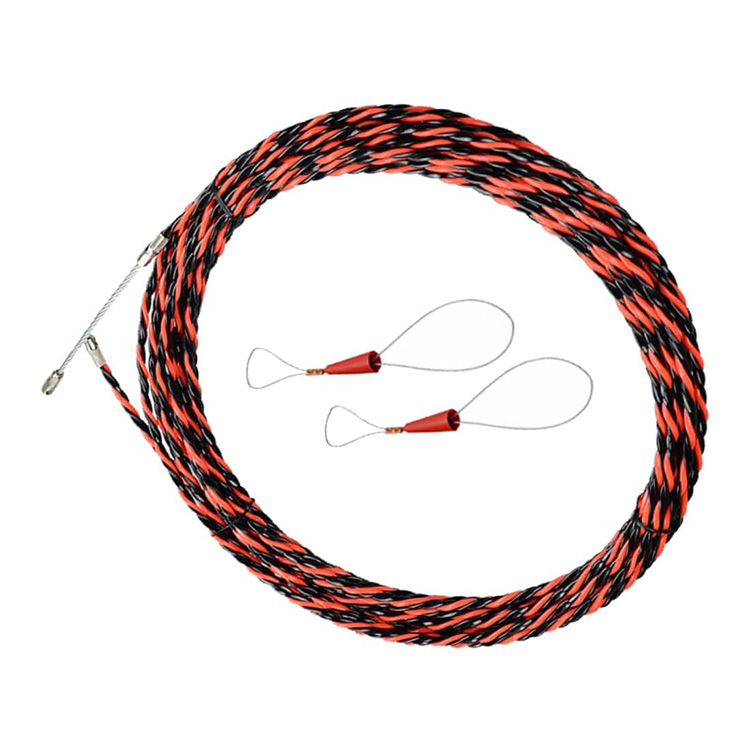
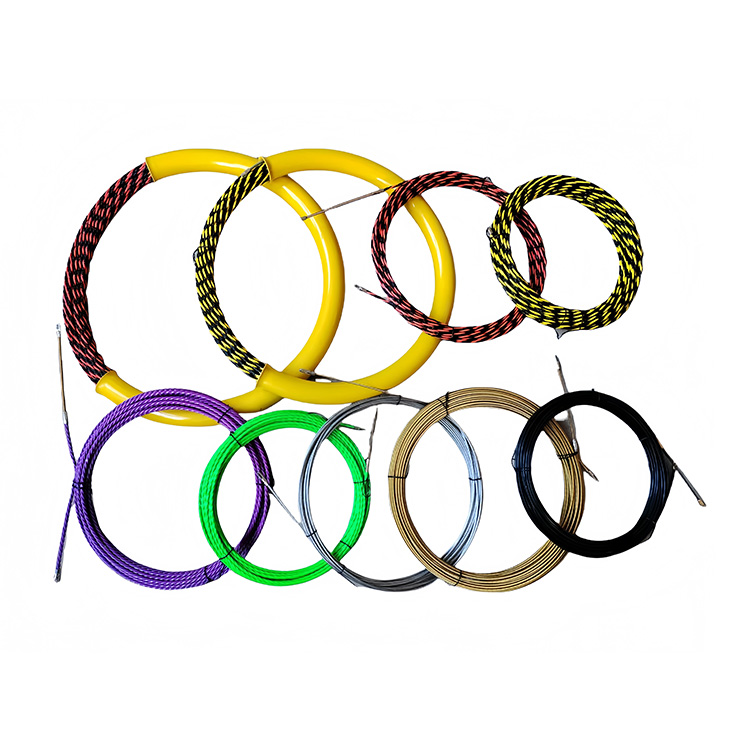
What Is a Polyester Cable Puller?
Manufactured with high-strength polyester fiber materials, the polyester cable puller is a special auxiliary pulling tool. It is usually matched with duct rods and auxiliary pulling equipment to smoothly guide power cables and communication wires through long-distance and bent pipeline routes. The unique material property of polyester enables the puller to balance high toughness and soft texture. It can bear strong pulling tension without fracture or permanent deformation. Meanwhile, its smooth surface and light weight allow workers to operate flexibly at construction sites. This tool is widely adopted in power transmission, communication network wiring, optical fiber laying and factory industrial wiring projects.
Core Performance Features of Polyester Cable Pullers
1. Superior Tensile Performance
High-density polyester fiber brings outstanding tensile strength. The puller can bear heavy cable loads steadily, avoiding stretching, breaking or damage in the process of strong pulling, and meeting the demands of long-distance cable construction.
2. Lightweight and Labor-Saving
Compared with traditional metal pullers, polyester products are far lighter in overall weight. They effectively relieve operator fatigue during long-time continuous operation and greatly improve the progress of cable laying.
3. Insulated and Safe to Use
Non-conductive insulation is one of its most critical advantages. Pure polyester materials do not conduct electricity, which can effectively prevent electric shock accidents and hidden dangers when working near live circuits, ensuring construction safety.
4. Anti-Corrosion and Chemical Stability
This fiber material features excellent resistance to moisture, oil stains and common industrial chemicals. It can adapt to complex harsh conditions such as damp underground pipelines and outdoor open-air environments, with strong environmental adaptability.
5. Flexible Structure and Long Service Life
Good bending flexibility allows the puller to pass through complex pipeline bends and narrow spaces smoothly. It is not easy to age and wear after repeated use, realizing long-term stable use.
Main Application Scenarios
Power Engineering Installation
It is commonly used in power distribution engineering to lay various power cables along conduits, cable trenches and closed pipelines, supporting daily power facility maintenance and renovation.
Communication Network Construction
In communication and broadband projects, the puller is applied to lay network cables and optical fiber lines in buried pipelines and overhead piping systems, adapting to long-distance line construction.
Industrial Factory Wiring
Industrial parks and manufacturing plants rely on polyester cable pullers for internal circuit transformation and equipment wiring, especially for narrow and complex mechanical pipeline layouts.
Building Construction Engineering
In residential and commercial building construction, it assists in embedding electric wires and network cables inside walls, ceilings and floors, facilitating concealed wiring construction.
Municipal Public Infrastructure
It is also widely used in municipal engineering including urban street lamp wiring, traffic signal circuit layout and underground public pipeline network transformation.
Comprehensive Advantages of Polyester Cable Pullers
High tensile strength with ultra-light weight
Insulated and non-conductive for high safety
Portable structure for easy carrying and operation
Resistant to rust, corrosion and harsh weather
Adaptable for indoor, outdoor and underground scenarios
Cut down construction time and reduce manual construction costs
With these comprehensive strengths, polyester cable pullers have become a high-cost-performance and practical auxiliary tool for modern cable construction.
Guide to Selecting a Qualified Polyester Cable Puller
1. Confirm Required Length
Determine the overall length of the puller according to the actual laying distance of on-site pipelines. For ultra-long and continuous pipeline systems, select extended specifications to meet construction needs.
2. Check Tension Grade
Match the tensile strength rating reasonably based on the cable weight and pipeline resistance. Heavy industrial cable laying needs high-tension customized models.
3. Reasonably Choose Diameter and Structure
Pullers with larger diameters own higher bearing capacity, while thin and slim designs feature better softness and flexibility, suitable for narrow pipelines and multi-bend routes.
4. Adapt to On-Site Working Conditions
Fully evaluate the use environment, including indoor dry spaces, outdoor exposed environments and damp buried pipelines, to select products with corresponding anti-corrosion and moisture resistance.
5. Tool Accessory Compatibility
Prioritize products that can be perfectly matched with duct rods, pulling connectors and other auxiliary accessories, to realize rapid assembly and improve overall construction efficiency.
Daily Maintenance and Care Guidelines
Correct daily maintenance can effectively extend the service cycle of polyester cable pullers:
Clean surface dirt, mud and chemical residues in time after each use;
Avoid sharp-angle bending, excessive twisting and violent pulling;
Store in a dry, cool and ventilated place to prevent moisture and mildew;
Conduct regular appearance inspection to check for fiber fraying and local wear;
Replace aging and damaged pullers in time to avoid safety risks during operation.
Conclusion
As an efficient, safe and durable special tool, the polyester cable puller occupies an irreplaceable position in modern cable laying. Its integrated advantages of high strength, flexible bending and electrical insulation can fully meet the construction demands of electric power, communication, industry and municipal engineering. Reasonable specification selection and standardized daily maintenance help maximize construction efficiency, reduce labor costs and lower operational safety risks. With the continuous expansion of global infrastructure construction, polyester cable pullers will continue to be essential basic tools for professional wiring and pipeline construction.
References
GB/T 7714: Modeling of Synthetic Fiber Ropes and Frequency Response of Long-Distance Cable Pulley System
MLA:Tensile and Fatigue Properties of High-Strength Polyester Fiber Ropes for Industrial Cable Pulling Applications. Journal of Materials Engineering and Performance
APA:Comparative Analysis of Polyester vs. Steel Cable Pullers: Safety, Efficiency, and Durability in Electrical Installation. Electrical Engineering Journal