


Polyester Fish Tape Material Structure Explained
Author:jiujiu Release time:2026-02-03 17:56:52 Number of views:125order
The Polyester Fish Tape is an essential tool for cable installation in electrical, telecommunications, and construction projects. It helps guide wires and cables through conduits, walls, ceilings, and narrow passages with precision and safety. Unlike traditional metal fish tapes, polyester versions provide a balance of strength, flexibility, and non-conductive performance.
With modern manufacturer production systems and factory batch supply, polyester fish tape has evolved into a precision-engineered product rather than a simple pulling strip. Its performance depends heavily on material structure, fiber arrangement, surface treatment, and quality control during production. Understanding how the structure works helps users choose the right polyester fish tape for reliable and long-term operation in demanding environments.
This article explains the internal material design and manufacturing logic behind high-performance polyester fish tape.
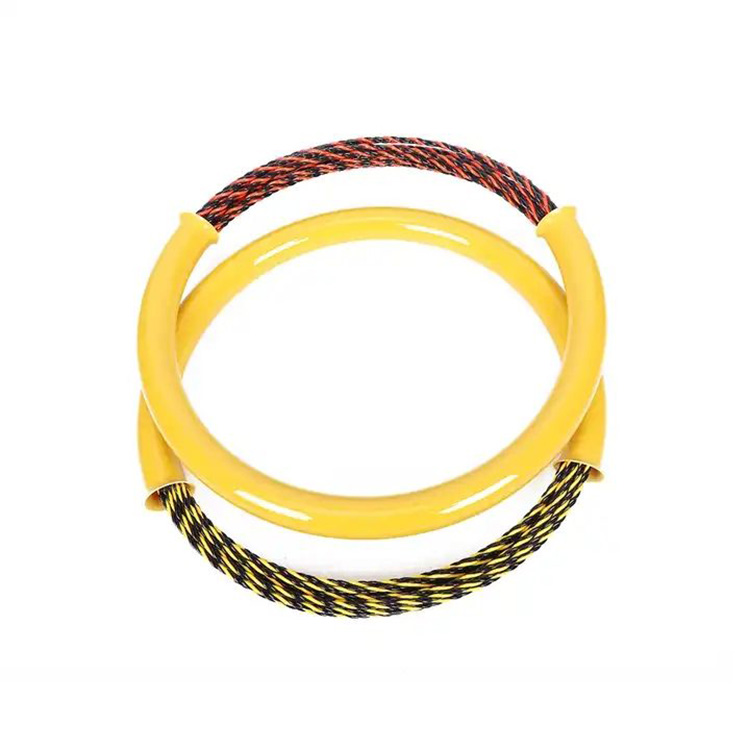
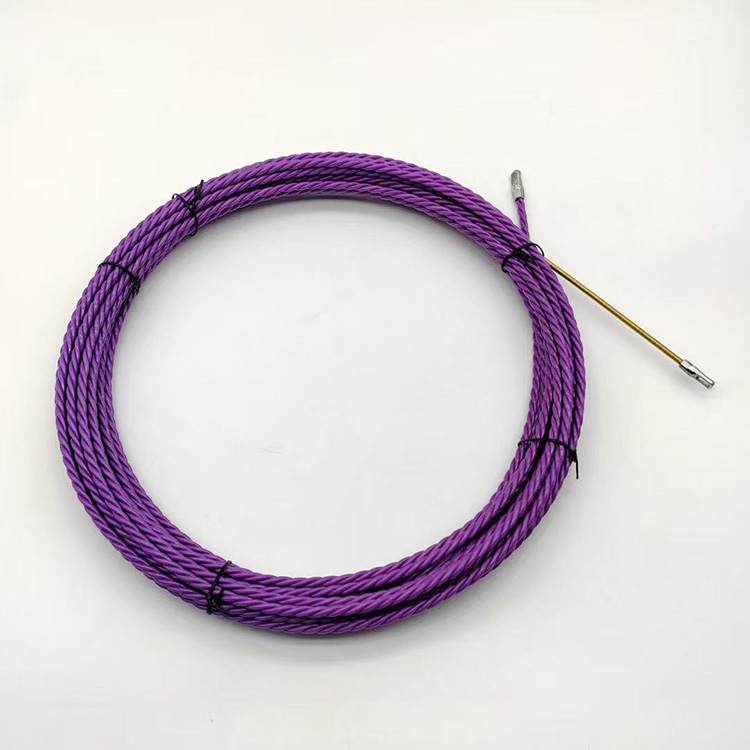
What Is Polyester Fish Tape?
A polyester fish tape is a flexible guiding tool made primarily from high-tenacity polyester fibers or reinforced polyester composites. It is used to route cables through confined spaces without damaging insulation or risking electrical conduction.
Compared with steel alternatives, a Polyester Fish Tape is lightweight, corrosion-resistant, and safer to use around live electrical systems. In professional factory production environments, the raw polyester material is processed, shaped, and finished to achieve consistent thickness, controlled stiffness, and smooth surface quality.
The material structure determines how the tape behaves when pushed, pulled, bent, or twisted during cable installation.
Core Material: High-Tenacity Polyester
At the heart of every polyester fish tape is high-tenacity polyester polymer. Polyester is a synthetic thermoplastic polymer known for its mechanical stability and environmental resistance.
Its main material advantages include:
·High tensile strength
·Controlled elongation
·Excellent fatigue resistance
·Moisture and chemical stability
·UV resistance for indoor and outdoor use
During manufacturer production, polyester pellets or yarns are selected for molecular consistency and processed into strips or fiber-reinforced tapes. The polymer chain orientation during extrusion or forming directly affects stiffness and pulling capacity of the polyester fish tape.
Fiber Orientation and Reinforcement Structure
Material strength does not come from polymer alone. Structural orientation plays a major role in performance.
Most Polyester Fish Tape products rely on:
·Longitudinal fiber alignment for push strength
·Layered reinforcement for bending control
·Composite construction to prevent splitting
In a factory production line, polyester fibers are oriented along the length of the tape. This allows force to transmit efficiently when pushing through long conduits. At the same time, cross-direction layers improve resistance to twisting and kinking.
This balanced structure ensures the tape remains stiff enough to push forward but flexible enough to navigate curved pathways.
Surface Coating and Friction Control
The outer surface of polyester fish tape directly affects usability. Too much friction causes jamming, while too little control reduces pushing accuracy.
Professional production includes surface treatments that:
·Reduce friction against conduit walls
·Improve abrasion resistance
·Enhance wear life
·Prevent moisture absorption
In structured manufacturer production systems, coatings are applied evenly and cured to maintain thickness stability. Some coatings also increase visibility inside dark ducts, improving operational safety.
These treatments allow the polyester fish tape to glide smoothly through plastic, metal, and concrete conduits without damaging cable jackets.
Mechanical Behavior Under Load
A key advantage of polyester material is its predictable load response.
A quality Polyester Fish Tape demonstrates:
·High breaking strength
·Low permanent deformation
·Stable recovery after bending
·Controlled elastic behavior
During production, tensile and fatigue tests are performed to ensure the tape withstands repeated push-pull cycles. Manufacturer batch supply processes guarantee that every unit delivers similar mechanical performance across large orders.
Controlled elongation is important because excessive stretch reduces directional control during cable feeding, while overly rigid tapes risk cracking. Polyester offers a balanced mechanical profile.
Environmental Resistance of Polyester Structure
Cable installation often occurs in challenging conditions. Polyester material structure is engineered to handle:
·Humidity and water exposure
·Mild chemical environments
·Temperature variation
·Outdoor UV exposure
Unlike steel, polyester fish tape does not rust. Unlike some plastics, it maintains flexibility over time.
In factory batch production, additives and stabilizers are integrated into the polymer formulation to improve resistance against aging and environmental stress cracking. This ensures the polyester fish tape remains reliable throughout extended service life.
Safety Advantages of Polyester Material
Material structure directly influences safety. Polyester fish tape is non-conductive, reducing electrical risk during installation.
Additional safety benefits include:
·Lightweight handling
·Reduced recoil energy
·Smooth edges preventing cable damage
·Stable bending without sharp kinks
Through controlled manufacturer production, each polyester fish tape undergoes inspection for surface defects, thickness variation, and edge quality before shipment.
This makes polyester fish tape suitable for professional electrical, industrial, and construction environments where safety and control are critical.
Role of Manufacturer and Factory Production
High-performance polyester fish tape depends on integrated manufacturing, not just raw material. A professional manufacturer production system includes:
·Polymer material selection
·Fiber orientation control
·Layer lamination
·Surface coating application
·Mechanical testing and inspection
With organized factory batch supply, large volumes can be delivered with consistent stiffness, strength, and surface quality. This is especially important for contractors and industrial users who rely on uniform performance across multiple installation projects.
Factory production also supports customization of width, thickness, stiffness level, and length according to different cable routing needs.
Applications Driven by Material Structure
Because of its engineered structure, polyester fish tape is widely used in:
·Electrical conduit installations
·Telecommunications cabling
·Commercial building wiring
·Industrial automation systems
·Maintenance and retrofit projects
The internal structure ensures the polyester fish tape pushes accurately, resists abrasion, and protects sensitive cable insulation during routing.
Maintenance and Service Life
To extend service life of polyester fish tape:
·Clean after use
·Avoid sharp edges
·Store away from heat
·Inspect for surface wear
·Rewind properly
Manufacturer guidelines usually include care instructions to preserve performance of factory-produced polyester fish tape over repeated use cycles.
Conclusion
The Polyester Fish Tape is a precision-engineered tool whose performance comes from carefully designed material structure. High-tenacity polyester polymers, optimized fiber orientation, layered reinforcement, and controlled surface coatings combine to deliver strength, flexibility, and safety.
Through advanced manufacturer production systems and factory batch supply capability, modern polyester fish tape achieves consistent quality for professional cable installation. By understanding its internal structure, users can select a Polyester Fish Tape that provides efficiency, durability, and reliable performance across every wiring application.
References
GB/T 7714:Tomisawa R, Nagata M, Otsuka Y, et al. Tensile strength of polyester fiber estimated by molecular-chain extension prior to structure formation[J]. Scientific Reports, 2023, 13(1): 11759.
MLA:Tomisawa, Ren, et al. "Tensile strength of polyester fiber estimated by molecular-chain extension prior to structure formation." Scientific Reports 13.1 (2023): 11759.
APA:Tomisawa, R., Nagata, M., Otsuka, Y., Ikaga, T., Kim, K., Ohkoshi, Y., ... & Katsuta, H. (2023). Tensile strength of polyester fiber estimated by molecular-chain extension prior to structure formation. Scientific Reports, 13(1), 11759.