


How to Pull Cable Through Conduit with Multiple Bends
Author:jiujiu Release time:2026-09-22 23:29:31 Number of views:190order
Why Bends Are the Hard Part
Pulling cable through conduit is easy until you hit a bend. Each bend multiplies the pulling force required — the physics of friction means tension compounds as cable wraps around curves. With multiple bends in a run, pulling force can grow exponentially, quickly exceeding safe limits for both the cable and the crew.
This guide explains how professional installers plan and execute pulls through conduit with multiple bends — without damaging cable or risking injuries.
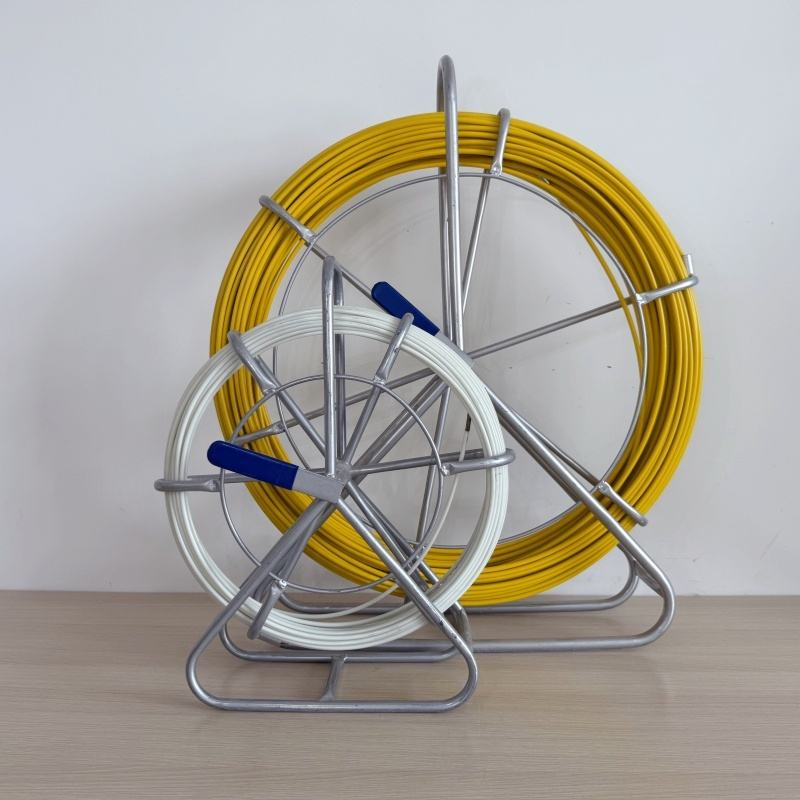
Route Planning Around Bends
Smart planning starts before the conduit is installed:
Minimize bends: Every unnecessary bend adds cost and risk. Design routes with the fewest, gentlest bends possible
Use larger-radius sweeps: Prefer 45° sweeps over 90° elbows wherever possible
Add pull points: Install pull boxes or access fittings at 90° bends and every 30m of run — they convert one long impossible pull into several easy ones
Consider the cable: Stiff, heavy cables (large copper, armored) need gentler bends than flexible data cables
Bend Limits & Code Requirements
| Conduit Type | Max Bends Between Pull Points | Notes |
|---|---|---|
| NEC (US) general rule | 360° total (four 90° bends) | Code maximum per pull segment |
| Best practice | 180°-270° (two to three 90° bends) | Keeps tension manageable |
| Fiber optic runs | 90°-180° recommended | Fiber is tension-sensitive |
⚠ Code Rule (NEC 362.28 etc.): Conduit runs between pull points may not contain more than 360° of bends. If your run exceeds this, you must add a pull box or junction point. Check your local code for specifics.
Understanding Tension at Bends
Each bend increases required pulling force. A simple rule of thumb:
Tension after bend ≈ Tension before bend × e(μθ)
where μ = friction coefficient (0.2-0.5), θ = bend angle in radians
where μ = friction coefficient (0.2-0.5), θ = bend angle in radians
In practical terms: a 90° bend with typical friction roughly doubles the pulling tension. Two bends ≈ 4× tension. Three bends ≈ 8×. That's why long runs with multiple bends fail without proper technique.
Practical Implications
Keep pull segments short — 30-60m maximum when multiple bends are involved
Lubricate aggressively — good lubrication can cut friction coefficient from 0.5 to 0.15, dramatically reducing tension buildup
Pull from the end that minimizes total bend angle in the loaded section
Use intermediate pulls at pull boxes rather than attempting one continuous pull
Lubrication Strategy
Lubrication is your #1 tool for beating bend-related tension:
Use proper cable-pulling lubricant — never soap, oil, or DIY substitutes
Pre-lubricate the conduit: Pump or pour lubricant into the conduit before the cable enters
Re-lubricate at every pull box — bends ahead need fresh lubricant
Use the right type: Wax-based lubricants for long/hard pulls; water-based for general use; fiber-compatible for fiber optics
Estimate generously: Most installers underestimate lubricant needs by half — use more than you think
Using Pull Boxes & Pulleys
Pull Boxes (Access Fittings)
Installed at bend locations, they let you short-pull — pull from box to box instead of end to end
Allow inspection and re-lubrication at mid-route
Provide access for cable retrieval if a pull fails
Guide Pulleys (at open boxes and transitions)
Corner pulleys at 90° changes of direction guide cable smoothly around the bend
Straight pulleys support long horizontal runs and prevent sagging
Pulleys protect the cable jacket from box edges and conduit mouths
For fiber optic cable, use large-radius pulleys to protect bend radius
Step-by-Step Pulling Technique for Multi-Bend Runs
Walk the route — identify every bend, pull box, and access point. Plan the pull direction.
Prepare the conduit — clean, inspect, and pre-lubricate the full run.
Set up the feed end — cable reel on a reel stand, aligned with the entry, brake engaged.
Feed the rodder — run a fiberglass duct rodder through to establish the pull line. At boxes, pull the rodder out, re-lubricate, and continue.
Attach cable — use a correctly sized pulling grip + swivel connected to the rodder leader.
Position crews — one operator at the pulling end, one at the reel, and one at each pull box to monitor and re-lubricate.
Pull slowly and steadily — 10-20 m/min. Watch tension. Stop immediately if it spikes.
Manage each box transition — as the grip reaches each box, re-lubricate the cable ahead and confirm smooth passage through the bend.
Complete and secure — leave slack at both ends, coil properly, and label.
Pro Tip: If tension starts climbing near a bend, stop and check that bend specifically. A snagged grip or dry conduit section at a bend is the most common failure point. Re-lubricate and restart slowly — often the pull completes easily after this.
Frequently Asked Questions
Q: How many 90-degree bends can a cable tolerate in one pull?
A: Electrical codes allow up to 360° (four 90° bends) between pull points, but practical experience shows 2-3 bends per segment keeps tension manageable. For fiber optic cable, 1-2 bends per segment is recommended.
Q: Can I pull cable through a conduit with an S-curve (opposite bends)?
A: Yes, but S-curves (reverse bends) create significantly more friction than same-direction bends because the cable must flex both ways. Minimize S-curves in conduit layout and expect higher tension.
Q: What if my conduit already has too many bends and no pull boxes?
A: You have two options: (1) cut in a pull box at the midpoint if code and access permit, or (2) use a powered pulling system with tension monitoring and accept higher risk. Cutting in a pull box is almost always the better choice.