


Applications of Traceable Duct Rodders in Underground Utilities
Author:jiujiu Release time:2026-06-21 19:45:37 Number of views:88order
Modern underground utility construction presents challenges that extend well beyond simply pulling cables through existing conduits. Locating buried infrastructure, avoiding conflicts with existing utilities during new installations, and maintaining accurate documentation of underground pathways have become essential competencies for telecommunications contractors and municipal construction teams. Traceable duct rodders address these requirements by incorporating locating features directly into the rod structure, enabling workers to track the rod's precise position beneath the surface throughout the entire installation process.
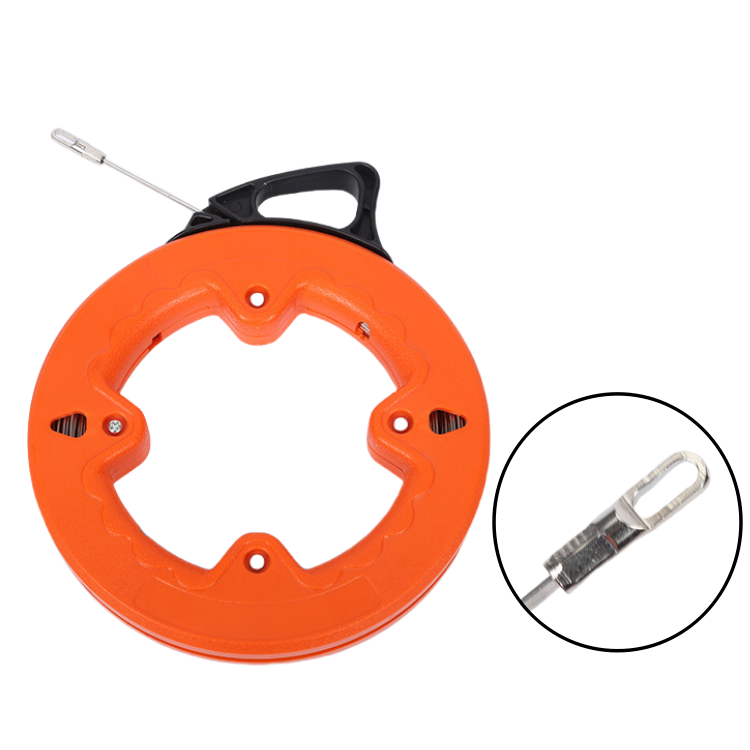
How Traceable Duct Rodders Work
Traceable duct rodders integrate a conductive element, typically a continuous copper wire or steel wire core, within the fiberglass body of the rod. When connected to a compatible locator transmitter, this conductive core carries an electromagnetic signal that can be detected from the surface using standard utility locating equipment. The signal strength varies predictably with depth and rod position, allowing skilled operators to pinpoint the exact location of the rod tip as it progresses through underground conduits and ductwork.
Manufacturers of traceable rodders engineer the copper or steel core to run continuously along the entire rod length, ensuring consistent signal transmission from the tip all the way back to the entry point at ground level. This continuous conduction eliminates dead zones that could otherwise leave sections of the pathway unlocatable, providing complete signal coverage throughout the full length of the installation run.
Preventing Damage to Existing Infrastructure
One of the most valuable applications of traceable duct rodders is damage prevention during new cable installation projects. Before pulling any cables, the rodder itself can be traced to confirm the exact pathway through the conduit system, identifying any deviations from the planned route that might indicate shared pathways with existing utilities or unexpected obstacles within the conduit.
This pre-installation tracing capability is particularly important in dense urban environments where telecommunications, electrical distribution, natural gas, water distribution, and sewer infrastructure occupy adjacent or overlapping underground corridors. Accidentally drilling into an existing gas line or power cable during a new fiber installation creates serious safety hazards and costly project delays that can damage a contractor's reputation and relationship with clients. Traceable rodders give operators the confidence to proceed knowing precisely where the tool is positioned relative to other critical underground assets.
Supporting As-Built Documentation
Municipal authorities and utility operators increasingly require accurate as-built documentation for all new underground cable installations as a condition of project acceptance and permit sign-off. Traceable duct rodders facilitate this requirement by providing a verifiable, physically traceable record of the actual installation pathway that can be documented during the construction phase and incorporated into permanent facility management records.
Location data collected during rodder tracing can be integrated with geographic information systems used by municipal authorities and utility operators to maintain current, accurate maps of their underground networks. This GIS integration supports long-term asset management, emergency response planning, and inter-utility coordination during future construction projects occurring in the same geographic area.
Industrial and Commercial Applications
Beyond municipal telecommunications projects, traceable duct rodders serve important functions in industrial facilities, large commercial campuses, hospital complexes, university districts, and major institutional properties. These environments often feature extensive underground utility networks that have evolved through decades of construction and modification, making it genuinely difficult to determine exact cable pathways without locatable equipment that provides real-time position feedback.
Industrial manufacturers and suppliers provide traceable rodders in various configurations suited to different scale requirements, from small campus installations spanning a few hundred meters to large-scale industrial complexes with underground networks extending across entire facilities. The ability to precisely trace cable pathways simplifies maintenance and troubleshooting operations, allowing technicians to quickly identify the physical location of cable faults or damage without exploratory excavation.
Compliance with Safety Regulations
Many jurisdictions now mandate the use of locatable equipment for new underground cable installations as a condition of construction permit approval. Traceable duct rodders help contractors and municipalities demonstrate compliance with these increasingly stringent regulations, reducing the risk of project delays, financial penalties, or reputational damage associated with non-compliant installations.
Working with experienced manufacturers and suppliers ensures access to traceable rodders that meet relevant industry standards for signal strength, maximum depth range, and positional accuracy. Professional suppliers can also provide guidance on compatible locating equipment from multiple manufacturers and share best practices for maximizing the effectiveness of the tracing capability in different underground environments.
Conclusion
Traceable duct rodders have become essential tools for contemporary underground utility construction, providing critical capabilities for damage prevention, as-built documentation, and regulatory compliance. Their ability to transmit locatable electromagnetic signals through complete cable pathways makes them indispensable for telecommunications contractors, municipal construction teams, and industrial facility managers operating in complex underground environments where precision and safety cannot be compromised.
References
Underground Utility Damage Prevention Standards, Municipal Construction Permit Requirements, Telecommunications Infrastructure Installation Manual, Industrial Cable Installation Practices, Utility Locating Equipment Guidelines.