


Understanding the Material Composition of Polyester Cable Pullers
Author:jiujiu Release time:2026-01-31 17:12:43 Number of views:102order
The Polyester Cable Puller is a vital tool in electrical installation, telecommunications, construction, and industrial wiring projects. Designed to guide and pull cables through conduits, ducts, and confined spaces, it must combine flexibility, strength, abrasion resistance, and long-term durability.
With modern manufacturer production systems and factory batch supply, polyester cable pullers are no longer simple ropes. They are engineered products created through controlled material selection, weaving technology, coating processes, and performance testing. Understanding the material composition behind a polyester cable puller helps users select the right tool for safety, efficiency, and extended service life in demanding environments.
This article explores the structure, materials, and manufacturing principles that make polyester cable pullers reliable for professional applications.
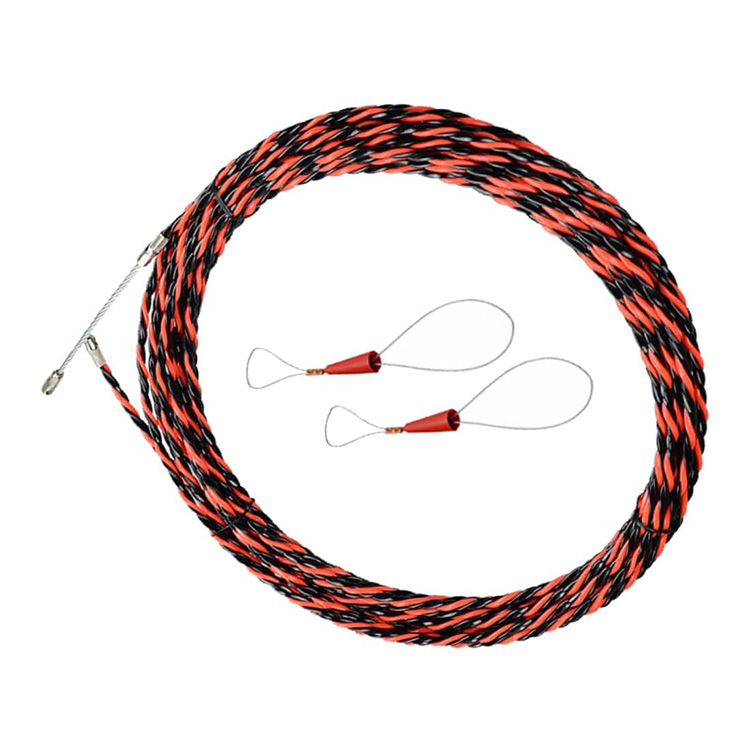
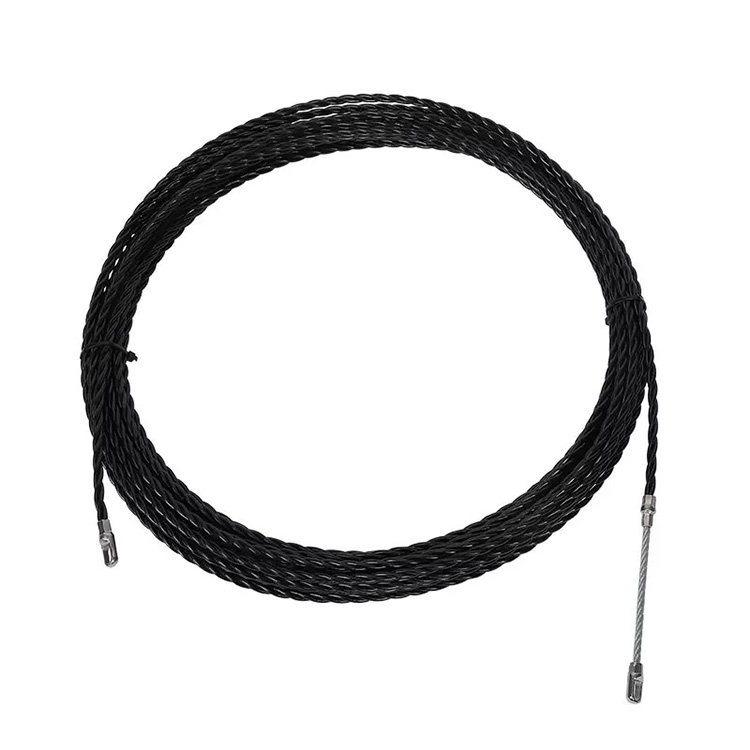
What Is a Polyester Cable Puller?
A polyester cable puller is a flexible pulling line made primarily from high-tenacity polyester fibers. It is used to install electrical and communication cables by guiding them through pipes, conduits, and trays without damaging insulation or structures.
Unlike metal wires, polyester pullers are lightweight, non-conductive, corrosion-resistant, and gentle on cable jackets. In professional factory production environments, the fibers are carefully processed, braided, and finished to create a product that balances tensile strength with controlled elasticity.
The material composition directly determines how the polyester cable puller performs under load, friction, and repeated bending.
Core Material: High-Tenacity Polyester Fibers
The foundation of every Polyester Cable Puller is high-tenacity polyester filament. Polyester is a synthetic polymer known for its excellent mechanical and environmental properties.
Key characteristics of polyester fibers include:
·High tensile strength
·Low stretch under working load
·Resistance to moisture and chemicals
·UV stability for outdoor use
·Long fatigue life under repeated bending
During manufacturer production, polyester yarns are selected based on denier, twist, and filament count. These factors influence flexibility and load capacity. Higher filament density improves abrasion resistance, while controlled twisting improves handling performance when pulling through curved conduits.
Braiding and Weaving Structure
Material alone is not enough. The way fibers are arranged is equally important. Most polyester cable pullers use braided or woven constructions rather than simple twisted cords.
Common structural designs include:
·Solid braid for balanced strength
·Double braid for added durability
·Core-sheath construction for smooth outer surfaces
In a factory production line, automated braiding machines interlace the polyester yarns at precise angles. This structure distributes pulling force evenly across the puller and prevents local stress concentration.
A well-designed braid improves:
·Load stability
·Flexibility
·Resistance to flattening
·Surface smoothness inside conduits
These benefits help the polyester cable puller move efficiently without snagging or damaging cable insulation.
Protective Coatings and Surface Treatments
Many polyester cable pullers receive surface coatings after braiding. These treatments improve friction behavior and durability.
Typical coating functions include:
·Reducing surface friction
·Increasing abrasion resistance
·Improving dirt and moisture resistance
·Enhancing visibility in dark conduits
In professional manufacturer production, coatings are applied evenly and cured under controlled conditions. Some processes integrate lubricating elements into the surface layer to help the polyester cable puller glide smoothly through long or complex routing paths.
Surface treatment also improves handling comfort for technicians during manual pulling operations.
Tensile Strength and Load Behavior
One of the most critical aspects of material composition is tensile performance. Polyester fibers offer an excellent balance between strength and controlled elongation.
A quality Polyester Cable Puller is designed to:
·Withstand high pulling forces
·Maintain shape under load
·Minimize permanent deformation
·Recover after repeated tension cycles
During production, load testing is carried out to verify breaking strength and working load limits. Manufacturer batch supply processes ensure each puller meets consistent mechanical standards before delivery.
Controlled elongation is important because excessive stretch can reduce control during cable installation, while too little flexibility increases risk of sudden failure. Polyester naturally balances these two properties.
Environmental Resistance of Polyester Materials
Polyester performs well in various environments commonly encountered in cable installation:
·Moist areas
·Industrial chemical exposure
·Temperature variation
·Outdoor UV exposure
·Unlike metal pullers, polyester does not corrode, and unlike some plastics, it resists long-term degradation.
In factory batch production, material selection and surface treatments are optimized for both indoor and outdoor applications, allowing the polyester cable puller to maintain strength and stability even after repeated use in harsh jobsite conditions.
Safety Advantages of Material Composition
The non-conductive nature of polyester is a major safety advantage. It reduces the risk of accidental electrical contact during installation.
Additional safety benefits include:
·Lightweight handling
·Reduced recoil risk
·Smooth surface preventing cable jacket damage
·Controlled breaking behavior
Through structured manufacturer production systems, safety performance is validated through mechanical and visual inspection. This ensures the polyester cable puller remains predictable and reliable during use.
Role of Manufacturer and Factory Production
High-quality polyester cable pullers depend on more than raw materials. A professional manufacturer production process integrates:
·Fiber selection
·Braiding automation
·Coating application
·Load testing
·Dimensional inspection
With organized factory batch supply, multiple units can be produced with consistent diameter, strength, and surface quality. This is essential for contractors and industrial users who require reliable performance across large installation projects.
Factory production also allows customization of length, thickness, and strength rating to suit different application demands.
Applications Driven by Material Design
Thanks to their engineered composition, polyester cable pullers are widely used in:
·Electrical conduit installation
·Telecommunications wiring
·Industrial automation projects
·Construction cable routing
·Maintenance and retrofitting tasks
In all these applications, the material structure ensures the polyester cable puller moves smoothly, carries load safely, and protects sensitive cable surfaces.
Maintenance and Service Life
Although polyester is durable, good handling extends service life:
·Clean after use
·Avoid sharp edges
·Store away from extreme heat
·Inspect for surface damage
Manufacturer guidelines often include basic care instructions so that factory-produced polyester cable pullers retain performance across many installation cycles.
Conclusion
The Polyester Cable Puller is a precision-engineered tool whose performance is defined by its material composition. High-tenacity polyester fibers, optimized braiding structures, protective coatings, and controlled tensile behavior combine to deliver strength, flexibility, and safety.
Through advanced manufacturer production systems and factory batch supply capability, modern polyester cable pullers achieve consistent quality for professional cable installation projects. By understanding how materials and structure work together, users can choose a Polyester Cable Puller that delivers efficiency, durability, and long-term reliability in every application.
References
GB/T 7714:Tomisawa R, Nagata M, Otsuka Y, et al. Tensile strength of polyester fiber estimated by molecular-chain extension prior to structure formation[J]. Scientific Reports, 2023, 13(1): 11759.
MLA:Tomisawa, Ren, et al. "Tensile strength of polyester fiber estimated by molecular-chain extension prior to structure formation." Scientific Reports 13.1 (2023): 11759.
APA:Tomisawa, R., Nagata, M., Otsuka, Y., Ikaga, T., Kim, K., Ohkoshi, Y., ... & Katsuta, H. (2023). Tensile strength of polyester fiber estimated by molecular-chain extension prior to structure formation. Scientific Reports, 13(1), 11759.