


What Is a Fiberglass Duct Rodder and Its Uses in Cable Installation
Author:jiujiu Release time:2026-06-24 19:50:52 Number of views:105order
A fiberglass duct rodder is a specialized cable installation tool widely used by telecommunications contractors, electrical construction firms, and municipal infrastructure teams. It consists of a flexible, high-tensile fiberglass rod that is fed through conduits, ductwork, and underground pipelines to establish a pilot line for pulling cables across otherwise inaccessible pathways. The rodder enables a continuous guide from one access point to another, after which the actual cable or wire is attached to the rod's terminal end and drawn back through the entire conduit system to complete the installation.
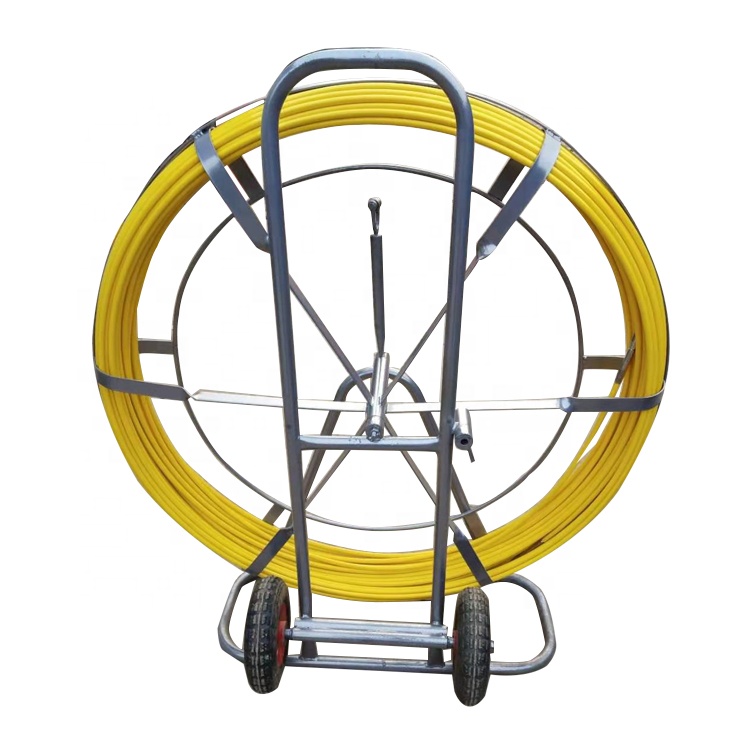
The core of a quality fiberglass duct rodder is manufactured from continuous fiberglass strands bonded with epoxy resin, creating a rod that balances flexibility with structural rigidity. This composite construction allows the tool to navigate multiple bends, corners, and varying directional changes without kinking or suffering permanent deformation that would compromise its effectiveness. Manufacturers and factory suppliers offer duct rodders in an extensive range of diameters, from 4mm for delicate indoor wiring to 18mm or larger for heavy-duty municipal infrastructure deployments.
Primary Applications in Cable Installation
In telecommunications projects, duct rodders have become indispensable for installing fiber optic cables, coaxial cables, and copper twisted-pair lines that form the backbone of modern communication networks. Technicians feed the rod through existing ductwork to establish a continuous pilot pathway, then attach the cable to the rod's terminal end and pull it back through the conduit. This two-stage approach significantly reduces the risk of cable damage and eliminates the need for invasive excavation in areas where conduits already exist.
Electrical construction teams use fiberglass duct rodders extensively for pulling power cables through underground conduits that connect street lighting systems, traffic signal networks, and commercial building service entries. The non-conductive nature of fiberglass makes it a particularly safe choice in environments where electrical hazards are present or unpredictable. Additionally, the smooth outer surface of the rod prevents abrasion to cable jackets during the pulling process, preserving insulation integrity throughout the installation.
Advantages Over Traditional Methods
In addition to flexibility and length advantages, fiberglass rodders demonstrate superior resistance to environmental factors including moisture, soil chemistry, and temperature fluctuations that commonly affect metal equipment in underground service conditions. Fiberglass duct rodders also resist UV degradation when stored outdoors, and their smooth surface prevents cable jacket damage during pulling operations.
Before the widespread adoption of fiberglass duct rodders, construction workers typically relied on steel fish tapes or manual pushing techniques that were time-consuming and physically demanding, with limited effectiveness in complex conduit systems. Steel tapes tend to kink when encountering tight bends and offer limited length options that constrain their utility in longer runs. Fiberglass rodders supplied by professional manufacturers can extend hundreds of meters in a single continuous run, enabling workers to complete long-distance municipal installations without intermediate access points that would add cost and complexity to the project.
Quality Standards and Specifications
Reputable manufacturers subject their fiberglass duct rodders to rigorous quality testing to ensure consistent performance across demanding field conditions. Standard quality tests include flexibility and bending cycle testing, with quality rodders typically rated to exceed 10,000 bending cycles without structural failure or degradation in mechanical properties. Temperature resistance testing across ranges from minus 40 degrees Celsius to 60 degrees Celsius verifies reliable performance regardless of seasonal weather conditions or underground environmental factors.
Choosing the Right Duct Rodder for Your Project
Selecting the appropriate duct rodder involves careful evaluation of several factors, including conduit diameter, total installation run length, and the environmental conditions at the job site. Most reputable suppliers offer standard diameters ranging from 4mm to 18mm, with rods sized for specific application categories such as building wire installation, street lamp pole wiring, and long-haul optical cable deployment. Understanding these sizing guidelines helps contractors avoid the common mistake of under-specifying equipment, which leads to installation failures and costly rework.
For optical cable runs exceeding 200 meters, a rod diameter of 14mm or larger is generally recommended to ensure adequate pushing force and pulling stability over extended distances. For shorter indoor installations under 100 meters, a 10mm to 12mm rodder typically provides sufficient performance while maintaining the flexibility needed for building infrastructure with multiple bends and junction points. Consulting with an experienced manufacturer or supplier helps identify the optimal configuration for specific project parameters.
Conclusion
Fiberglass duct rodders have established themselves as foundational tools in modern cable installation practice across telecommunications, electrical construction, and municipal infrastructure sectors. Their combination of durability, flexibility, lightweight handling, and ease of use makes them the preferred equipment choice for professional contractors and installation teams working on projects of all scales. Working with a reputable manufacturer or supplier ensures access to quality equipment that meets rigorous industry standards and delivers consistent, reliable performance across a wide range of demanding field applications.
References
Cable and Wire Installation Best Practices, Telecommunications Infrastructure Handbook, Electrical Construction Standards for Municipal Projects, Fiber Optic Cable Installation Guidelines, Underground Utility Construction Manual.